Redefining Meaningful Education – Leaning & The Brain – Podcast Skip to main content
Listen to Episode
Don't miss an episode

Subscribe and follow along for new episodes.

EPISODE 01 CONFERENCE EDITION

Redefining Meaningful Education

What does it actually mean for learning to be meaningful — not just to a curriculum, but to the young person doing the learning? In this first episode, Dr. Mary Helen Immordino-Yang, EdD, argues that the answer has less to do with content delivery and more to do with community: the cultural context students bring into a classroom, and the relationships that make abstract ideas feel worth wrestling with.

Drawing on decades of research at the intersection of neuroscience, psychology, and education, Mary Helen makes the case that deep learning happens through doing — through lived, embodied experience — far more than through mechanical repetition.

She explains why bridging research and practice requires taking a community’s cultural context seriously, rather than treating it as a variable to control for.

Mary Helen also traces her own path through this work — from graduate student to founding director of a neuroscience lab embedded in low-income school communities — and the pushback she encountered at nearly every step from each of the disciplines she moved between. It’s a candid look at what it takes to build a career, and a body of research, in the space between fields that don’t always agree on what counts as evidence.

"Learning happens by doing — not by mechanically absorbing information, but by living through it, in community, together."

Featured Guest

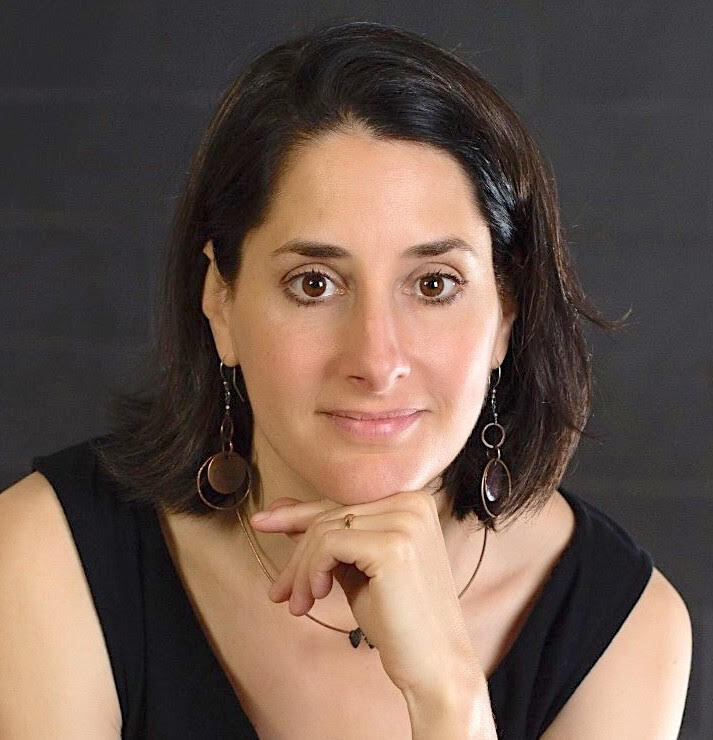
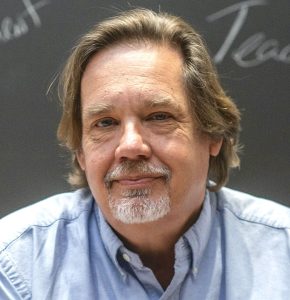
About Mary Helen Immodino-Yang

Ed.D., Harvard University

Fahmy and Donna Attallah Professor of Humanistic Psychology

Mary Helen Immordino-Yang is a professor of education, psychology, and science of learning at the University of Southern California, and founding director of the USC Center for Affective science of learning, Development, Learning and Education lab. Her work pairs in-depth qualitative interviews with longitudinal brain imaging and psychophysiological recording to reveal the coordinated mental, neural, and bodily processes by which adolescents and their teachers build meaning — deliberating on the abstract, systems-level, and ethical implications of complex information, social situations, and identities.

Her research underscores the active role youth play in their own brain and psychosocial development through the narratives they construct, and the capacities teachers cultivate to support student belonging and deep learning. She conducts her work in partnership with expert educators and diverse youth from the low-SES communities where she works, and writes and speaks extensively on redesigning schools around curiosity and civic reasoning to promote intellectual vibrance and thriving.

  • NATIONAL ACADEMY OF EDUCATION, 2023
  • SPENCER FOUNDATION MIDCAREER FELLOW
  • NATIONAL ACADEMIES – HOW PEOPLE LEARN II
  • ASPEN INSTITUTE COMMISSION ON SEAD
  • AAAS – AERA – APS – FABBS – IMBES
Hosted By

Your Hosts for This Episode

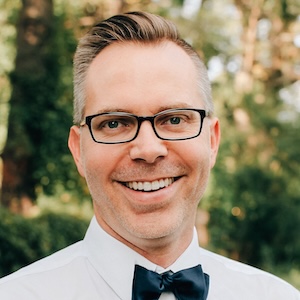
 David Daniel

David Daniel

Professor Emeritus of Psychology, James Madison University

Professor Emeritus of Psychology, James Madison University; Former Executive Director and Founding Board Member, International Mind, Brain, and Education Society; Former Managing Editor, Mind, Brain, and Education Journal; Recognized in the “Top 1% of Educational Researchers Influencing Public Debate” in the US; Co-Author, “Toward an Ecological Science of Teaching” (2021, Canadian Psychology), “Seeing Self and Others On-Screen Does Not Negatively Impact Learning in Virtual Classrooms”
 John Almarode

John Almarode

Professor of Education, James Madison University

Professor of Education, James Madison University; Co-Editor, Teacher Educator Journal; Co-Author, The Mathematics Playbook (2024), The Teacher Clarity Playbook, Grades K-12 (2024), The Early Childhood Education Playbook (2022), How Tutoring Works: Six Steps to Grow Motivation and Accelerate Student Learning (2021), How Learning Works (2021), Clarity for Learning (2018), From Snorkelers to Scuba Divers: Making the Elementary Science Classroom a Place of Engagement and Deep Learning (2017), Visible Learning for Science (2017),
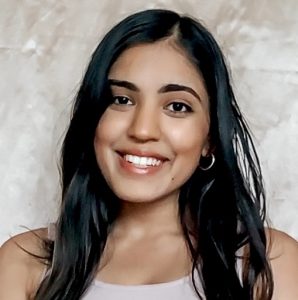
 Nistha Dube

Nistha Dube

Neuroscientist

Cognitive and Behavioral Neuroscience Degree from Virginia Tech University; Director of Learning, Mindful Education Lab, New York University; Educational Consultant, whose mission is to empower individuals to cultivate intentionality and purpose in their everyday lives; Featured on Business Insider; TEDx and Keynote Speaker, whose long-term vision is to bring self-discovery techniques to schools so that youth are better equipped with techniques for developing self-awareness and making intentional decisions for their future; Author,