Recently I wrote about surprising research into games: children who spent a little extra time playing board games made about as much reading progress as those who didn’t.
This week, I’ve found another intriguing study about playing games — this time focusing on collaboration, sharing, and friendship. Because schools frequently focus on non-academic development — how do we encourage children to share? how can we help them make friends? — this study’s questions offer us potentially helpful perspectives on our work.
Here’s the story.
Strings and Candies…
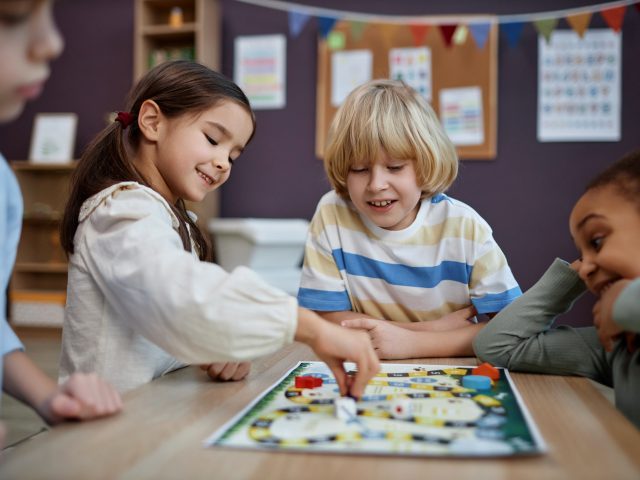
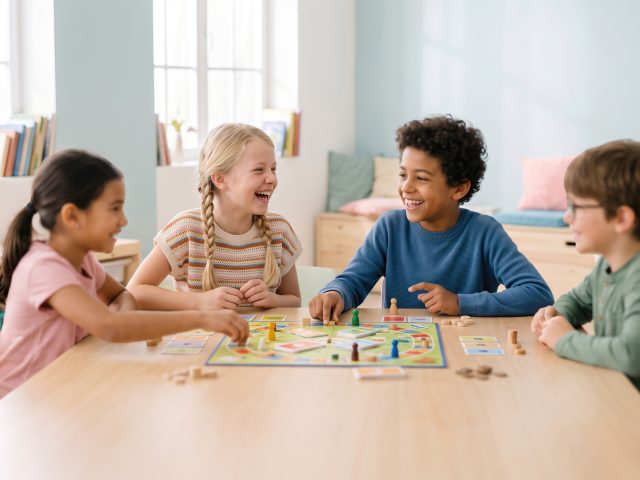
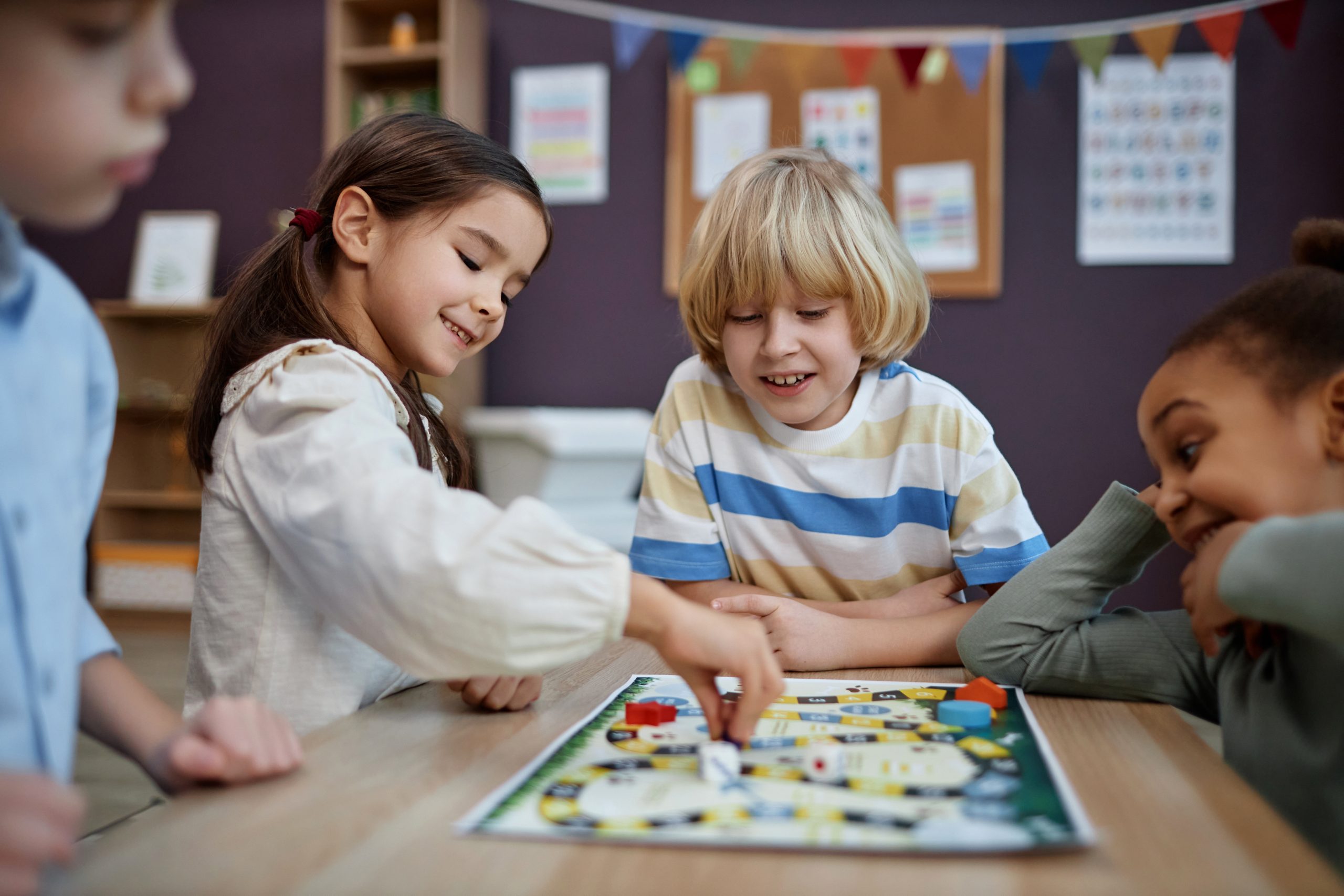
Researchers in Switzerland worked with 48 pairs of children, ages 4-6. Half of the pairs were same-sex: boy/boy or girl/girl; the other pairs were boy/girl. These children played a game that used two strings to manipulate a ball through a maze.
- Half of the pairs collaborated in playing the game: each child held one string, and so they had to cooperate to guide the ball successfully.
- The other pairs played the same game side by side in parallel play. Each child had his/her own game, and manipulated both strings on their own.
After the gameplay, researchers gave the children an unspoken opportunity to share. All children were presented with candy — but unequal amounts: one “lucky” child received three pieces of candy; the other received only one. When the researcher left the room for a minute, the “lucky” child had the chance to share their extra candy with the “unlucky” one. (To be clear: the researcher didn’t say anything about sharing…the child had the chance to share if s/he chose to.)
The researchers also measured the children’s perception of friendship. Both before and after gameplay, children privately rated their partner on a friendship scale, from 1 (“not at all a friend”) to 5 (“my best friend”).
The researchers hypothesized that
- the children who played the game together would be likelier to share than those who played side by side, and
- the children who played the game together would show greater increases in friendship, compared to those who played side by side.
In brief: cooperative gameplay would result in other kinds of pro-social behavior.
… and Surprises
The first hypothesis was, technically speaking, “a bust.” That is: “lucky” children who collaborated were no likelier to share than those who played separately.
And — curiously — NONE of the variables that researchers tracked predicted sharing. Boys were no likelier to share than girls; same-sex pairs didn’t share more than mixed-sex pairs. Surprisingly (to me), initial friendship ratings didn’t predict sharing either. That is: the children who rated their friendship more highly before the game didn’t reliably share more after the game.
(To be statistically thorough: only 13 of the 48 “lucky” children shared. With numbers that low, it’s hard to reach statistically significant conclusions about these precise questions.)
And: the second hypothesis was also a bust. Children in both groups — collaboration and parallel play — reported higher friendship ratings.
In brief: compared to parallel play, collaborative game playing did not result in demonstrable increases in sharing or friendship. Sharing behavior wasn’t different in both groups, and average friendship ratings increased in both groups.
Bad News and Good News?
At first, I think this study sounds like bad news. It just seems obvious that inviting children to collaborate will enhance the bonds between them. As a result, they’ll like each other more, and be likelier to share with each other. I might even have used this logic to champion group projects or other collaborative school ventures.
This particular study — within this particular context — throws cold water on both parts of that “seemingly obvious” statement.
I take a more promising lesson away from this research. We can all too easily assume that collaborative work is the best way for teachers to help students make friends. Were that assumption true, we would feel called upon to create complex group undertakings to help our students bond.
This study prompts us to consider an alternative hypothesis: perhaps the side-by-side academic work inherent in a typical school day already helps our students make friends.
This study doesn’t answer that question…but now we have a good reason to ask it.
Lejeune, F., Richard, S., & Gentaz, E. (2027). Collaboration fails to promote sharing behavior but both collaborative and parallel play boost friendship in young children aged 4 to 6. Journal of Experimental Child Psychology, 273, 106628.