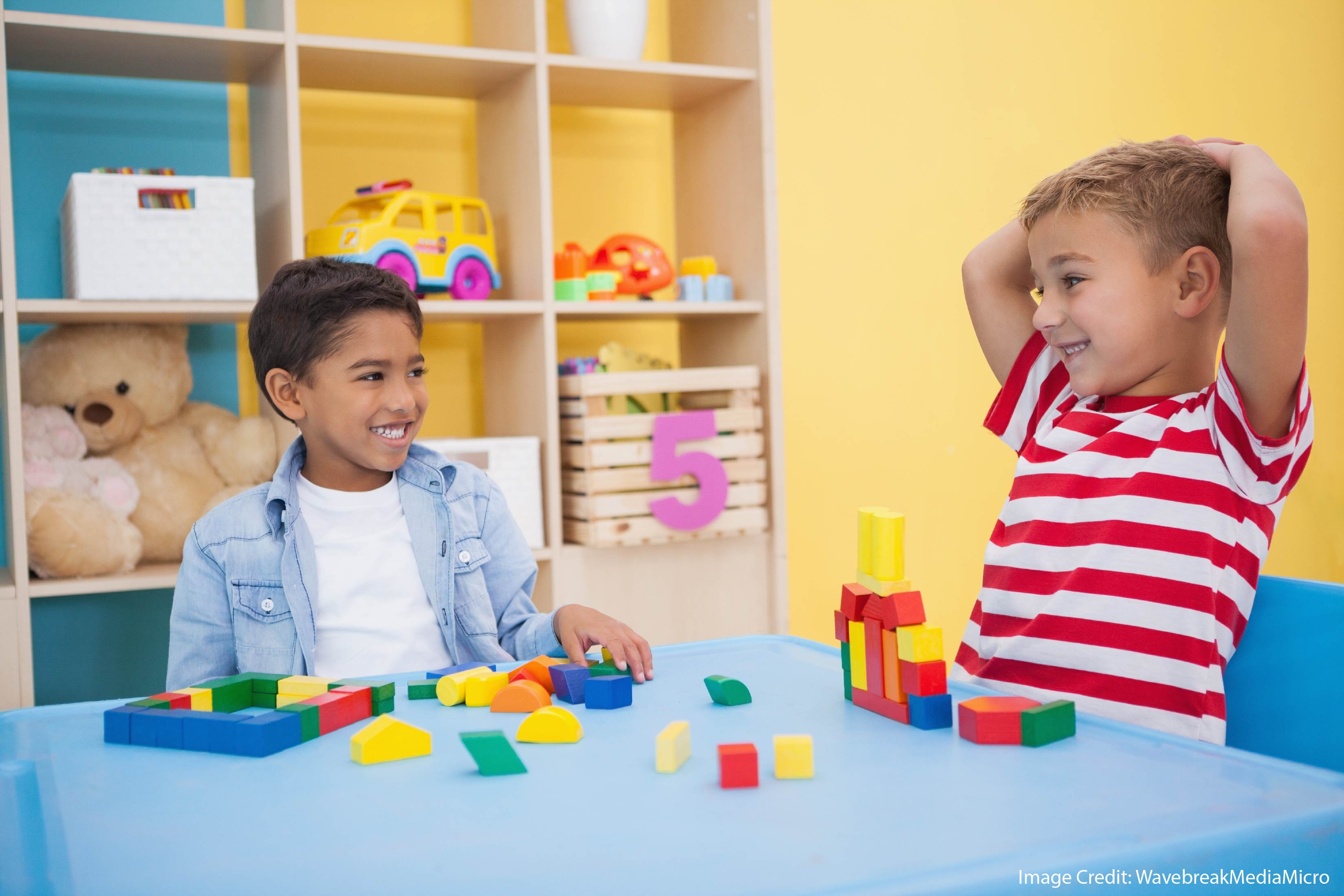
This brief (and admirably clear) article offers guidance to college students on the study strategies that have research support — and, helpfully, those that don’t.
The authors offer a few sources to verify their claims, explain why some counter-intuitive strategies work better that more traditional ones, and even toss in a few un-researched but entirely plausible suggestions.
(One minor disagreement: the authors cite the Mueller & Oppenheimer study to discourage laptop note-taking. Regular readers of the blog know I think that study doesn’t support its own conclusions.)
In a recent interview on this blog, Dr. Pooja K. Agarwal spoke about the benefits of retrieval practice: a study technique that–in her words–focuses on pulling information OUT of students’ brains rather than getting it back IN.
For example: if I begin today’s class by having my students write down three things they remember from yesterday’s lesson on the Han dynasty, that’s retrieval practice. After all, they’re going back into their memories and drawing OUT facts and ideas we discussed.
If, however, I begin by briefly summarizing yesterday’s class, well, then I’m trying to put information back IN. That’s not retrieval practice.
Dr. Agarwal summarizes the benefits of retrieval practice thus: “it works for all students in all subjects, all the time.”
Sounds tempting, no?
Pushing Boundaries
In one part of our conversation, Dr. Aragwal notes that she likes doing research in actual classrooms with actual students–rather than in psychology labs in highly controlled conditions–because “I really like the messiness of of doing scientific research in classrooms. The fire alarms, and school assemblies, and kids who are out sick, I really enjoy it because it pushes boundaries.”
In the spirit of messiness, here’s a recent post from the Learning Scientists about using retrieval practice in elementary school to learn vocabulary.
The good news about this study:
First: it took place in a real school with real students, not in a psychology lab. That means its results are likelier to be meaningful to teachers.
Second: the participants were 9-year-olds, not college students. So, we can be more confident that retrieval practice works with…say…4th graders.
Third: the study took place in the Netherlands, so we’ve got reason to believe that the benefits go beyond a North American cultural context.
So far, so good.
Let the Messiness Begin
At the same time, this particular study revealed a few muddles as well.
Muddle #1: the size of the benefit was relatively small. Retrieval practice produced more learning than simple restudy, and more than “elaborative retrieval,” but statistically speaking that difference was harder to find than in a psychology lab.
Muddle #2: Dr. Agarwal’s research shows that fill-in-the-blank retrieval practice and multiple-choice retrieval practice are equally effective. This study, however, contradicts that finding; multiple-choice retrieval didn’t produce more learning than pure restudy.
Muddle #3: believe it or not, muddle #3 contradicts muddle #2. Because of the study design, the authors acknowledge that their own findings about multiple-choice tests aren’t fully persuasive. For example: because the average score on the multiple-choice tests was above a 90%, there wasn’t enough difference among the students’ scores to calculate meaningful effects.
What should teachers do with all this contradictory information?
My advice: Embrace the muddle.
Teachers should expect that different studies produce muddled–and occasionally contradictory–results.
No one study tells us everything we need to know about retrieval practice. Instead, we’re looking for patterns of findings.
If we do ten studies, and eight of them show that retrieval practice helps learning, that’s impressive. We don’t need to be thrown off by one study that shows no effect–or, as in this case, a relatively smaller effect than in a psych lab.
The Quiet Finding
Although the authors don’t dwell on this point, one finding jumped out at me.
In one of the restudy conditions, students were asked to “elaborate” on the meaning of the word. For example, as they tried to remember “compost pile,” they were asked to circle the words relating to a compost pile on this list: manure, plastic, delicious, orange-peels, mailbox, dead leaves.
My teacherly instincts tell me that this restudy condition ought to help students. After all, to circle the correct words, they have to think a bit harder about the meaning of the phrase “compost pile.” That additional thought strikes me as a desirable difficulty, and ought to produce more learning.
But–at least in this one study–it didn’t. Students who “elaboratively restudied” scored between the “pure restudy” group and the “retrieval practice” group–and their scores weren’t significantly different from either.
The Take-Aways…
I myself reach three conclusions based on this research:
A) Yup: retrieval practice still works, even with 4th graders, even with vocabulary learning, even in the Netherlands.
B) My instincts about elaborative restudy might be off. I should keep my eyes peeled for further research.
C) The muddle isn’t disheartening, it’s enjoyable. Jump in–the water’s warm!
Let’s say that psychology researchers clearly demonstrate that retrieval practice helps students form long-term memories better than rereading the textbook does.
However, despite this clear evidence, these researchers nonetheless emphatically recommend that students avoid retrieval practice and insteadreread the textbook. These researchers have two justifications for their perverse recommendation:
First: students aren’t currently doing retrieval practice, and
Second: they can’t possibly learn how to do so.
Because we are teachers, we are likely to respond this way: “Wait a minute! Students learn how to do new things all the time. If retrieval practice is better, we should teach them how to do it, and then they’ll learn more. This solution is perfectly obvious.”
Of course it is. It’s PERFECTLY OBVIOUS.
Believe It Or Not…
This hypothetical situation is, in fact, all too real.
In 2014, Pam Mueller and Dan Oppenheimer did a blockbuster study comparing the learning advantages of handwritten notes to laptop notes.
Their data clearly suggest that laptop notes ought to be superior to handwritten notes as long as students learn to take notes the correct way.
(The correct way is: students should reword the professor’s lecture, rather than simply copy the words down verbatim.)
However–amazingly–the study concludes
First: students aren’t currently rewording their professor’s lecture, and
Second: they can’t possibly learn how to do so.
Because of these two beliefs, Mueller and Oppenheimer argue that–in the witty title of their article–“The Pen is Mightier than the Laptop.”
But, as we’ve seen in the hypothetical above, this conclusion is PERFECTLY OBVIOUSLY incorrect.
Students can learn how to do new things. They do so all the time. Learning to do new things is the point of school.
If students can learn to reword the professor’s lecture when taking notes on a laptop, then Mueller and Oppenheimer’s own data suggest that they’ll learn more. And yes, I do mean “learn more than people who take handwritten notes.”
(Why? Because laptop note-takers can write more words than handwriters, and in M&O’s research, more words lead to more learning.)
And yet, despite the self-evident logic of this argument, the belief that handwritten notes are superior to laptop notes has won the day.
That argument is commonplace is the field of psychology. (Here‘s a recent example.)
I do need to be clear about the limits of my argument:
First: I do NOT argue that a study has been done supporting my specific hypothesis. That is: as far as I know, no one has trained students to take reworded laptop notes, and found a learning benefit over reworded handwritten notes. That conclusion is the logical hypothesis based on Mueller and Oppenheimer’s research, but we have no explicit research support yet.
Second: I do NOT discount the importance of internet distractions. Of course students using laptops might be easily distracted by Twinsta-face-gram-book. (Like everyone else, I cite Faria Sana’s research to emphasize this point.)
However, that’s not the argument that Mueller and Oppenheimer are making. Their research isn’t about internet distractions; it’s about the importance of reworded notes vs. verbatim notes.
Third: I often hear the argument that the physical act of writing helps encode learning more richly than the physical act of typing. When I ask for research supporting that contention, people send me articles about 1st and 2nd graders learning to write.
It is, I suppose, possible that this research about 1st graders applies to college students taking notes. But, that’s a very substantial extrapolation–much grander than my own modest extrapolation of Mueller and Oppenheimer’s research.
And, again, it’s NOT the argument that M&O are making.
To believe that the kinesthetics of handwriting make an essential difference to learning, I want to find a study showing that the physical act of writing helps high school/college students who are taking handwritten notes learn more. Absent that research, this argument is even more hypothetical than my own.
Hopeful Conclusion
The field of Mind, Brain, & Education promises that the whole will be greater than the sum of the parts.
That is: if psychologists and neuroscientists and teachers work together, we can all help each other understand how to do our work better.
Frequently, advice from the world of psychology gives teachers wise guidance. (For example–retrieval practice.)
In this case, we teachers can give psychology wise guidance. The founding assumption of the Mueller and Oppenheimer study–that students can’t learn to do new things–simply isn’t true. No one knows that better than teachers do.
If we can keep this essential truth at the front of psychology and neuroscience research, we can benefit the work that they do, and improve the advice that they give.
This meta-analysis, which looks at studies including almost 12,000 students, concludes that creating concept maps does indeed promote learning.
Specifically, it’s better than simply looking at concept maps, or listening to lectures, or participating in discussions, or even writing summaries.
The article summarizes several hypotheses to explain the benefits of concept mapping: it reduces working memory load by using both visual and verbal channels, it requires greater cognitive elaboration, and so forth.
So, let’s hear it: how do you get your students to map concepts? What successes have you had? Let me know in the comments…
The answer to the titular question depends on a) your definition of “project-based learning,” and b) your methodology for measuring success.
In a just-published, comprehensive literature review, MDRC takes 84 pages to say: “we can’t really answer the question, because we don’t have consistent definitions or consistent methodologies.”
For example:
Without a common set of PBL design principles, it is difficult to use the existing body of research to draw conclusions about PBL’s effectiveness. (p. 53)
or
More rigorous evidence is needed to confirm whether PBL is a better approach to prepare students for college and career than traditional teacher-directed methods. (p. 55)
That’s a frustrating answer.
If you love and believe in PBL–and, more than most pedagogical theories, PBL really has true believers–you’d rather have a ringing endorsement.
If you’re a skeptic–check out Kirschner’s emphatic rejection here–you’d like this idea put to bed once and for all.
In this review, however, the authors make clear that until we agree what PBL really is (and, what it isn’t), we can’t coherently measure its effectiveness.
What Should Teachers Do?
In the absence of a clear research answer to this question, I have two suggestions.
First: teacher experience matters. If you and your colleagues have experience teaching both PBL and direct-instruction curricula, and you’ve had good success with one or the other, then draw on that experience. As long as you’re being honest with yourselves, and keeping good records, then your experience is–for now–at least as good as any other information we’ve got.
Second: rely on useful principles from cognitive science. Does PBL help your students pay attention? If yes, that’s good. Does PBL decrease their motivation? If yes, that’s bad.
Quite often, for instance, I find that PBL curricula overwhelm students’ working memory limits. If so, then it doesn’t matter that the curriculum ought to work, or was designed by experts, because it’s overwhelming working memory.
In other words: if the curriculum sounds upliftingly progressive, but it violates basic principles of cognition, then put the rubric down and step away from the authentic question.
Every curriculum must fit with the way that students’ brains work–including a PBL curriculum.
(In case you’re wondering, “MDRC” stands for “Manpower Demonstration Research Corporation.” It was created by the Ford Foundation; its lumpy name was simplified to MDRC in 2003. You can read its history here.)
Teachers hate (and love) multiple-choice tests. On the one hand, they seem dreadfully reductive. On the other, they’re blissfully easy to grade — and easy grading is never to be belittled.
In our recent conversation, Pooja Agarwal recommended multiple-choice tests as one kind of retrieval practice. Inspired by her guidance, you might be asking yourself: “what can researchers tell me about the best kind of multiple-choice test to give?”
If you’re asking yourself that question, look no further: the estimable Andrew Butler is on the case.
(For example: if you want to know how many distractors to include on your test, you should see what Butler has to say…)
When we walk into a classroom, especially an early learning or elementary school one, manipulatives are almost always within reach. Look to your left, and notice the group of children spinning the hands on a pretend clock, trying to figure out what 6:30 should look like. Glance to you right, and watch the students sort pretend money into the dollar slots of a dinging cash register. And peer over your shoulder, as students use square, circle, and triangle magnets to create geometric worlds on a magnetic easel.
In a previous article, I discussed some of the cognitive research on problem-solving and decision-making. And while that piece focuses primarily on how conscious and unconscious thoughts make sense of questions and choices, this article turns to another important aspect of problem-solving: classroom manipulatives.
How do physical objects help us make sense of questions and concepts?
Manipulatives in Mathematics
Manipulatives are a type of symbol that can take nearly any form. One of the most common types of manipulatives that we may come across are base-10 blocks; small foam squares that can be combined and separated to help students understand basic math concepts (e.g., addition). Other common manipulatives in the classroom include pretend money, model buildings, and modeling clay.
Now, fiddling with manipulatives can be pretty enjoyable; but, as a learning tool, they come with a fair amount of controversy. This is especially so with mathematics manipulatives.
The more traditional school of thought tends to suggest that manipulatives help children learn math by reducing the abstractness of math problems. [1] They do this by substituting mathematical symbols with concrete objects. For example, the symbolic character “3” can be represented with three blocks. And if you toss in another three blocks, you’ve represented both the concept of addition and “6”.
But, more recent arguments have asserted that manipulatives can only really promote mathematics learning when teachers assist children in understanding the symbolic relation between physical objects and the math concepts they represent. The dual-representation hypothesis posits that when children perceive manipulatives as only being objects (e.g., a single base-10 block as just a squishy square), it is challenging to understand their relation to the mathematical expression they represent (e.g., the number one).
Style vs. Substance
One study that demonstrated just how tricky manipulatives can be investigated the ways in which elementary school students used pretend money when solving math word problems. [2]
First, fourth, and sixth grade students were asked to complete ten world problems that involved money. Half of the participating students received manipulatives: realistic bills and coins along with the suggestion that these materials could be used to help solve the problems. The other half of the students did not receive any manipulatives.
At all grades, the students who did not have access to the manipulatives performed better on the word problems than the students who did. Access to the pretend money actually appeared to interfere with students’ accuracy.
But why?
In a second experiment, fifth grade students were asked to complete ten more word problems. This time, the students were assigned to one of three manipulatives conditions:
realistic, perceptually rich bills and coins
bland bills and coins
no physical manipulatives
The students were also asked to show their work on their answer sheets. This allowed the researchers to analyze students’ incorrect answers to determine whether they made conceptual or computational errors.
The researchers found that the students who used the perceptually rich pretend money made more errors than both the children who used the bland money and the children who did not use manipulatives.
The students who used the bland money performed at the same level as the students who had no access to the manipulatives.
Further, when analyzing the pattern of errors made by students in each condition, it appeared that strategy selection was influenced by the students’ access to the perceptually rich money. Compared to the students in the other two conditions, students in the perceptually rich condition were more likely to select a particular strategy (such as multiplication or division) that often resulted in an incorrect answer.
However, even though these students made more errors overall, their written work indicated that their conceptual understanding of the word problems was the strongest of the three groups.
Thus, there appears to be somewhat of a trade-off when using manipulatives. While these materials can help students relate their learning to real-world experiences, as well as promote conceptual understandings, perceptually rich manipulatives may distract children–and that distraction ultimately results in computational errors.
Two Sides to Every Coin
Interestingly, although research suggests that physical manipulatives can be distracting in a not-so-good way, it also seems that symbols can sometimes distract in a not-so-bad way.
This finding has been shown in preschoolers who participate in the Less is More task. In this tricky game, children must point to a small tray holding two candies in order to receive a larger tray with five candies. To succeed, children must inhibit their urge to point to the tray with more candies on it when asked which one they would like.
Given that young children generally have difficulty inhibiting themselves under such conditions, one study asked whether variations of the Less is More task might reduce the affective component of the game through symbolic distancing. [3] That is, would three year olds’ performance on the task improve if the large and small quantities of candy were represented by something else?
Children were randomly assigned to one of four conditions:
the traditional representation of smaller and larger quantities of candies (real treats)
rocks representing the candies, with children shown one-to-one correspondence between the rocks and candies (i.e., if children chose the tray with two rocks, they got five candies)
arrays of dots to represent the candies without one-to-one correspondence (i.e., one set of dots was larger than the other, but the number of dots was not the same as the number of candies)
one picture of mice and one picture of an elephant to represent small and large rewards, respectively
It turned out that the preschoolers’ performance on the mouse/elephant condition was significantly better than on the real treat condition. In other words, children more often pointed to the mice (small symbol) in order to get the elephant (large reward) than they did the two candies (small quantity) in order to get the five candies (large quantity).
Performance on both the mouse/elephant condition and the dots condition were significantly better than the real-treat and rock conditions. It appears, then, that the use of symbols can also distract in a helpful way. In particular, symbols with greater psychological distance from their referent (i.e., the mouse and elephant seem less related to the candies than the one-to-one corresponding rocks do) can reduce the emotional component of the Less is More task.
With this buffer from the emotional temptation of the larger tray of candies, children seem better able to inhibit their instinct to point to it.
Use ‘Em or Lose ‘Em
Despite the controversy that surrounds manipulatives and symbolic reasoning, most researchers seem to agree that there is a time and a place for each. And, most certainly, each has its own learning curve.
In order for manipulatives to be beneficial, researchers generally suggest that teachers:
a) should strive to explicitly connect the manipulatives to the concepts they represent; and
b) should select objects that easily allow children to understand their relation to concepts.
For example, the best math manipulatives tend to be objects that are only used for math learning (e.g., base-10 blocks); are not particularly interesting or familiar; and possess an internal structure that explicitly represents the relevant math concept.
But, when aiming to distract from emotionally-charged situations, symbols that seem unrelated to the emotionally charged object or event generally set students (especially young children) up for success.
References:
[1] Uttal, D. H., Scudder, K. V., & DeLoache, J. S. (1997). Manipulatives as symbols: A new perspective on the use of concrete objects to teach mathematics. Journal of Applied Developmental Psychology, 18, 37-54.
[2] McNeil, N. M., Uttal, D. H., Jarvin, L., & Sternberg, R. J. (2009). Should you show me the money? Concrete objects both hurt and help performance on math problems. Learning and Instruction, 19, 171-184.
[3] Carlson, S. M., Davis, A. C., Leach, J. G. (2005). Less is more: Executive function and symbolic representation in preschool children. Psychological Science, 16, 609-616.
Most of us have heard the adage about the two ways that someone can get into a swimming pool: jump right in, or enter slowly to acclimate to the temperature a few inches at a time.
Most of us have probably also witnessed (or experienced) the varied ways that someone might approach an assignment: one could start and finish it right away; work on it in small chunks over an extended period of time; or wait until the last moment to start, likely rushing to finish.
And for those that are keeping an eye on back-to-school sales events, there are of course different ways to shop: one could impulse purchase an item, or do some research beforehand to get the best possible deal.
The common thread in all of those scenarios is that different methods, strategies, and thought processes can be employed to solve problems or complete tasks. And each has its own time and place. So how do we decide exactly which ones to use in a given situation?
Algorithms and heuristics
The science behind problem solving and decision-making comprises a robust portion of cognitive research and involves the study of both conscious and unconscious thought.
Overall, there are two primary ways that a problem can be tackled: with algorithms or with heuristics. [1] An algorithmic approach refers to a series of steps that are more or less guaranteed to yield the solution. While this approach is most easily thought of in the context of mathematics (e.g., following a mathematical formula), an algorithmic approach also refers to such procedures as following a recipe or backtracking your steps to find a lost object.
Heuristics, on the other hand, are associative strategies that don’t necessarily lead to a solution, but are generally pretty successful in getting you there. These include conscious strategies (such as solving a maze by making sure your path stays in the general direction of the end point) and unconscious strategies (such as emotional instincts). Because heuristics are more subjective and less systematic than an algorithmic approach, they tend to be more prone to error.
In the classroom, solving problems with an algorithmic approach is fairly straight-forward: students can learn the needed procedural steps for a task and identify any places where they might have gone wrong, such as a miscalculation or a typo.
Heuristics are more complicated, however, and much of the research on problem solving aims to understand how children and adults solve problems in complex, confusing, or murky situations. One question of particular interest involves transfer: how do children apply, or transfer, their knowledge and skills from one problem-solving scenario to another?
Six of one, half-dozen of the other
Research suggests that students tend to have trouble transferring knowledge between problems that share only the same deep structure. For example, two puzzles that can be solved with the same logic, but that have different numbers, settings, or characters, are tricky.
In contrast, problems that share both their deep structure and shallow structure can be solved with relative ease.
A seminal study that illustrates the challenges of transfer asked students to solve theRadiation Dilemma: a medical puzzle of how to destroy a tumor with laser beams. [2] Some of the students were first told to read The General: a puzzle (and its solution) based on the common military strategy of surrounding an enemy and attacking from all sides. The solution to the Radiation Dilemma was analogous to the solution for The General: radiation beams should target the tumor from all sides until destroyed.
The researchers found that the students who first read the solution to The General successfully solved the Radiation Dilemma more often than those who did not.
However, students who received a hint that the solution to The General problem would help them solve the Radiation Problem were actually more successful in solving it than those who read both problems but received no hint.
This finding suggests that analogies can certainly be a helpful guide when children (or adults) are trying to make sense of a problem or find similarities between different contexts. But, they can also be confusing. Presumably, people become distracted by or hyper-focused on shallow structural features (e.g., reading the Radiation Dilemma and trying to remember what medical strategy was used on a TV drama) and thus overlook the deep structure similarities that are present.
So, when we ask students to make connections between two problems, scenarios, or stories that have surface-level differences, a little hint may just go a long way.
The less the merrier?
In addition to better understanding how to make decisions or think about problems, researchers also aim to understand how much we should think about them. And, contrary to popular thought, it appears that reasoned and evaluative thinking may not always be best.
In fact, there is evidence for the deliberation-without-attention effect: some problem-solving situations seem to benefit more from unconscious cognitive processing. To investigate this, scholars at the University of Amsterdam set out to determine whether better decisions result from unconscious or conscious thought. [3]
In their experiment:
participants (college students) read information about four hypothetical cars
the descriptions of the cars were either simple (four features of the car were listed) or complex (12 features were listed)
some of the features were positive and some were negative; the “best” car had the highest ratio of positive-to-negative features
four minutes passed between participants reading about the cars and being asked to choose the best one
some participants spent those four minutes thinking about the cars, while the others were given a puzzle to solve in order to distract them from such thinking
When asked to choose the “best” car, two groups stood out:
Group A: participants that (1) read the simple car description and (2) consciously thought about the cars were more likely to identify the best car than those who read the simple description and then worked on the puzzle
Group B: participants who: (1) read the most complexcar descriptions and (2) were then distracted by the puzzle were more likely to identify the best car than those who read the complex description and consciously thought about the car options
The participants in Group B actually had a higher overall success rate than those in Group A.
Thus, it appeared that conscious thinkers made the best choices with simple conditions, but did not perform as well with complex circumstances. In contrast, the unconscious thinkers performed best with complex circumstances, but performed more poorly with simple ones.
Buyer’s Remorse
Of course, the cars that the participants evaluated were fictional. The researchers therefore wanted to see if their results would hold up in similar real-word circumstances. They traveled to two stores: IKEA (a complex store, because it sells furniture) and a department store (a simple store, because it sells a wide range of smaller items, such as kitchen accessories).
As shoppers were leaving the store with their purchases, the researchers asked them:
What did you buy?
How expensive was it?
Did you know about the product before you purchased it?
How much did you think about the product between seeing it and buying it?
The researchers then divided the shoppers into two groups: (1) conscious and (2) unconscious thinkers, based on amount of time they reportedly spent thinking about their purchased items.
After a few weeks, the researchers called the shoppers at home and asked them about their satisfaction with their purchases. In a similar vein to the first experiment, here the conscious thinkers reported more satisfaction for simple products (department store) and the unconscious thinkers reported more satisfaction for complex products (IKEA).
Thus, these experiments indicate that conscious thinking is linked to higher satisfaction with decisions when conditions are simple (less to evaluate), whereas unconscious thinking leads to higher satisfaction when conditions are complex (many factors to evaluate).
Why don’t you sleep on it
While these studies are only a snapshot of the problem-solving and decision-making research field, they offer some valuable thoughts for how we can support students in the classroom.
First, we know that students need to understand problems in order to solve them. It is likely a good habit to continually remind ourselves that our students do not all make sense of the same problems in the same way or at the same rate. Thus, as we saw in The General, when we offer students problem guides, strategies, or templates, a little nudge as to how to use them can be enormously beneficial.
Second, we often push our students to think deeply and critically about problems and context. And that is probably true now that, more than ever, thoughtful, evidence-based, and logical reasoning is critical for tackling both local and global issues.
But there is also much to be said about instinct, conscience, and whatever it is that goes on in our subconscious. So if we see our students dwelling on a problem, or sweating a decision, the best way that we can help them delve into a solution may just be to first have them step away for a little while.
References:
[1] Novick, L., & Bassok, M. (2006). Problem solving. In K. Holyoak & R. Morrison (Eds.), The Cambridge Handbook of Thinking and Reasoning (pp. 321-349). London: Cambridge University Press.
[2] Gick, M. & Holyoak, K. (1980). Analogical problem solving. Cognitive Psychology 12(3), 306-355.
[3] Dijksterhuis, A., Bos, M., Nordgren, L., & van Baaren, R. (2006). On making the right choice: The deliberation-without-attention effect. Science, 311, 1005-1007.
Should young children count on their fingers when learning math?
You can find strong opinions on both sides of this question. (This blog post uses 4 “No’s” and 5 exclamation points to discourage parents from allowing finger counting.)
Recent research from the University of Bristol, however, suggests that finger counting–when combined with other math exercises–improves quantitative skills more than either intervention by itself.
The study design is quite complex; check the link above if you’d like the details. But, the headline is clear: for 6- and 7-year-olds, a taboo against finger counting may well hinder the development of math skills.