Teachers who follow brain research have probably heard of “interleaving.”
This teaching strategy encourages us to mix up different kinds of practice problems, rather than sort them tidily into distinct bunches.
Imagine, for instance, that your math curriculum includes these four units:
A: graphing lines
B: calculating the area of circles
C: simplifying expressions
D: solving inequalities
I might be tempted to have have my students review graphing one night. The next night, they would focus on circles. The next, they would simplify expressions. And so forth. (Researchers call this “blocking.”)
Or, I could have them practice all four skills each night. (“Interleaving.”)
So, does blocking or interleaving help students learn better?
One Useful (but Incomplete) Answer
We have “known” the answer to this question for a long time.
Students learned formulas to calculate the volumes of irregular solids. Those who interleaved practice did better on a quiz two weeks later than those who blocked.
To be clear: this is a great study. (I always show it when I talk about interleaving with teachers. The graphs get gasps — really!)
But: does interleaving work for K-12 students? Does it work for anything other than irregular solids?
And, crucially: does it work beyond 2 weeks? We want our students to remember for months — even years. Two weeks is nice, but…we’re actually curious about much longer periods of time.
A Second (Much More Complete) Answer
Doug Rohrer’s team have just published a study looking at real-life interleaving in real-life classrooms.
They worked in five different schools, with fifteen different teachers, and almost 800 7th graders.
And, the test covered quite different topics — the four listed at the top of this post: graphing lines, calculating areas, simplifying expressions, solving inequalities.
And, get this: the study lasted for several MONTHS. From the first interleaved practice set to the final test was something like 145 days.
The results: the students who interleaved remembered more than those who blocked. By a lot.
(If you’re statsy, you’ll be impressed to know that the Cohen’s d averaged 0.68. For an intervention that costs basically nothing, that’s HUGE.)
In addition to these data, Rohrer & Co. gathered information from an anonymous teacher survey.
They got lots of good news. For instance:
14 teachers agreed (or strongly agreed) that interleaving raises scores.
13 thought it helped low-achieving students. (15 thought it helped high-achieving students.)
11 said they could use interleaving without changing the way they usually teach.
12 said other teachers can do it with little or no instruction.
(Check out page 9 for further survey results.)
Why Does Interleaving Work?
Rohrer’s team offers two answers to this question.
First, interleaved practice automatically produces two other benefits: spacing and retrieval practice.
Second, think for a minute about blocking. If students do practice problems that all require the same strategy (aka, blocking), then they have to execute that strategy. But, as Rohrer points out:
“Interleaved practice requires students to choose a strategy and not merely execute a strategy.”
This additional level of desirable difficulty requires students to practice selecting strategies: an essential part of using learning in the real world.
In Sum:
Rohrer’s study concludes with a few caveats.
Interleaving probably takes (a little) more time than blocking.
It probably has less of an effect over shorter periods of time. That is: you’ll see bigger results on chapter tests and year-end assignments than on weekly quizzes.
Crucially: students probably need a little blocked practice early on to get hold of a topic or concept. We shouldn’t start interleaving while initially explaining an idea.
But, the headlines focus on great news.
Interleaving works with real students in real classrooms. It’s easy to add to our teaching habits. It costs almost nothing. And: it genuinely helps students learn.
Here’s a vital question: How can we help young students learn math better?
We’ve got decades of research showing that children who understand a number line do better at many math tasks than those who don’t. In fact, when we teach them to understand the number line, they get better at those math tasks.
Researchers in Germany wondered if movement might help kindergarteners understand the basic principles of a number line.
That is: By moving their whole bodies to the left, they could see numbers get smaller. By moving their whole bodies to the right, they could see numbers get bigger.
Does this kind of bodily movement help children think about numbers and math?
When students compared numbers simply by checking boxes, they didn’t get better at various numerical measurements. When they compared numbers by moving left or right on a dance mat, they did — at least on some measurements.
The specific application of this principle will depend on you and your students. But, to get the conversation started, we can say:
Having kindergarteners manipulate a number line by moving left and right helped them understand some basic math better.
Specifics Matter
I’ve seen lots of enthusiasm lately about movement in classrooms. While I’m all in favor of allowing — even encouraging movement — I think we need to be precise and careful about the arguments for doing so.
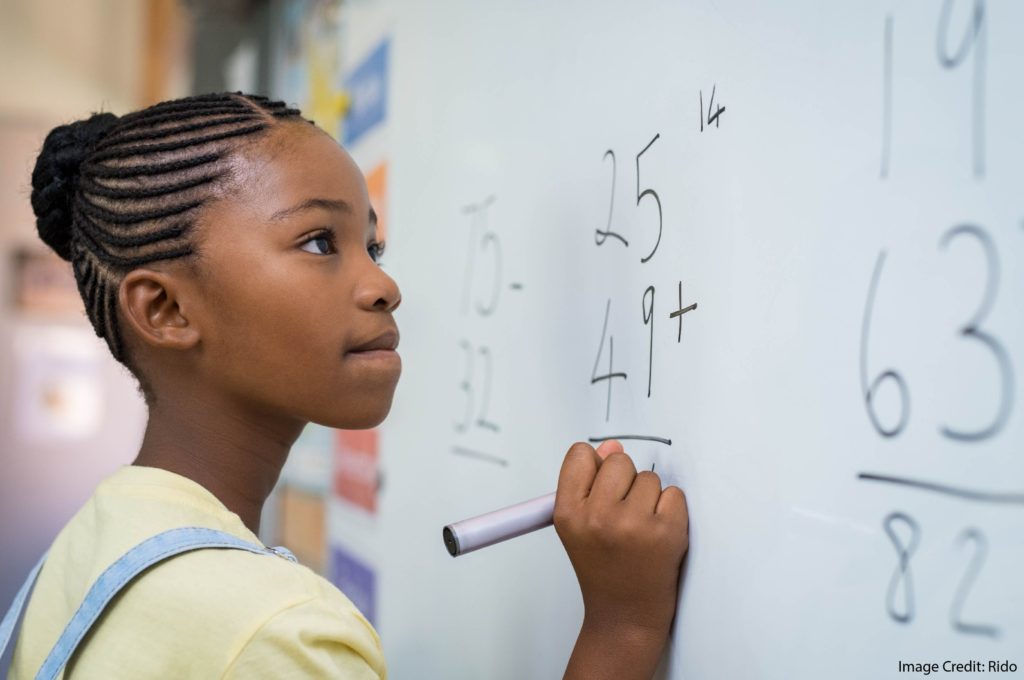
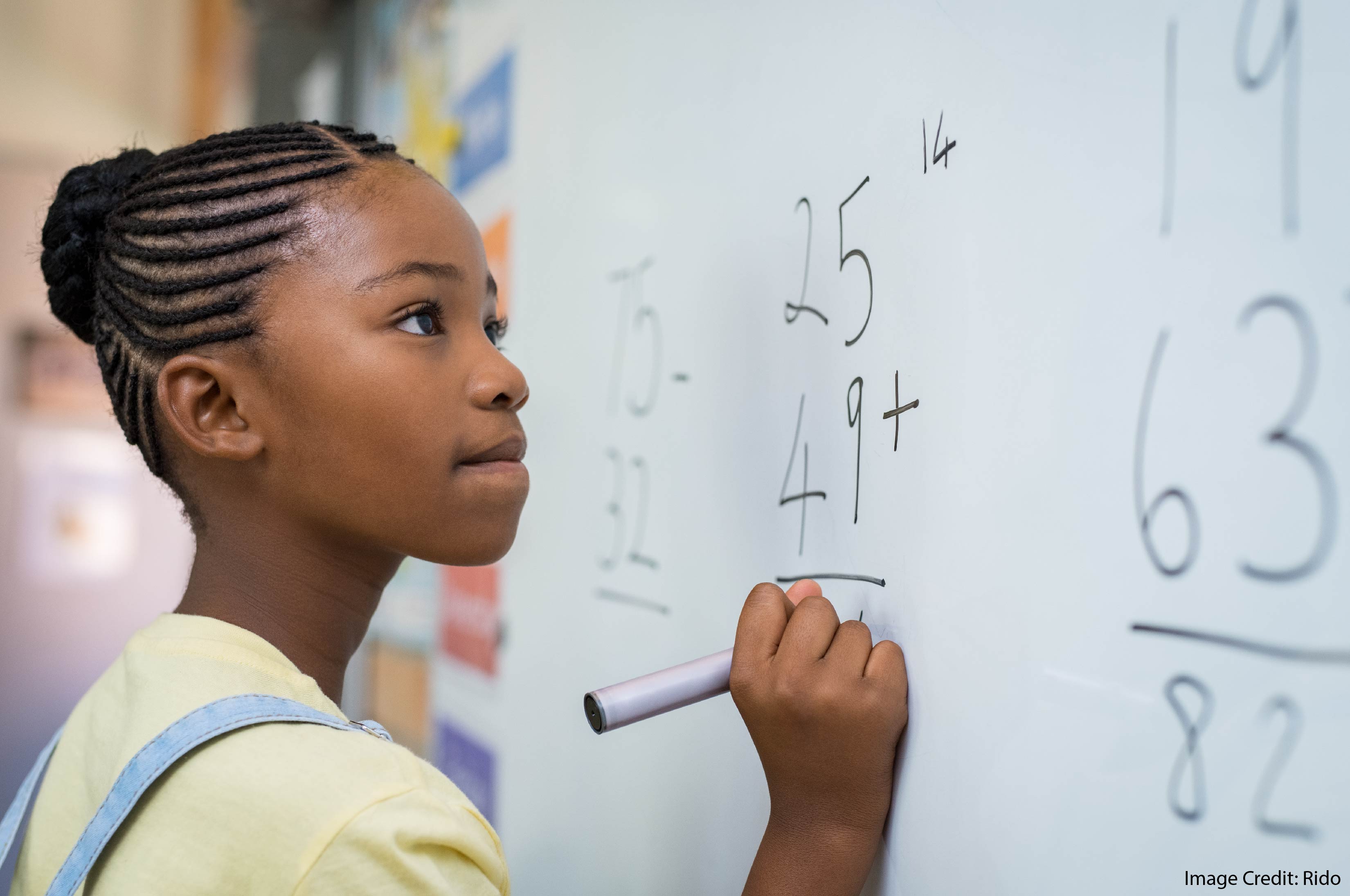
The study cited above does NOT show that “movement helps students learn.” Instead, it shows that a particular movement helped particular students learn a particular topic.
Remember, earlier research had showed the importance of the number line. The researchers weren’t testing movement just because movement seemed cool. They tested it because the physical reality of a number line makes this idea so plausible.
Imagine, instead, that the study methodology described above were used to teach students about colors.
Of course, unlike the number line, colors aren’t an especially spatial concept. So, it’s not obvious that this same teaching technique would have benefits for this kind of learning goal.
To be clear: my point is not that movement is a bad idea. Instead, we should understand clearly why this movement will benefit these students while they learn this topic.
Maybe a particular movement fits with a particular cognitive process — as in the number-line example.
Maybe movement helps re-energize droopy students.
Maybe you’ve seen thoughtful research showing that students did better learning parts of speech (say) when they did hand gestures along with them.
In each of these cases, you’ve got a good reason to incorporate movement into the lesson plan. We should not, however, default to a sweeping statement that students must move to learn.
Your own teaching (and learning) experiences may show that — at times — quiet, motionless concentration create the very best learning environment.
You’ve probably heard of the “method of loci,” or — more glamorously — the “memory palace.”
Here’s how the strategy works. If I want to remember several words, I visualize them along a path that I know well: say, the walk from my house to the square where I do all my shopping.
To recall the words, I simply walk along that path again in my mind. This combination of visuals — the more striking the better — will help me remember even a long list of unrelated words.
This method gets lots of love, most famously in Joshua Foer’s Moonwalking with Einstein.
Surely we should teach it to our students, no?
Palace Boundaries
We always look for boundary conditions here on the blog. That is, even good teaching ideas have limits, and we want to know what’s outside those limits.
So, for the “method of loci,” one question goes like this: how often do you ask your students to memorize long lists of unrelated words?
If the answer is, “not often,” then I’m not sure how much they’ll benefit from building a memory palace.
Dr. Christopher Sanchez wondered about another limit.
The “method of loci” relies on visualization. Not everyone is equally good at that. Does “visuospatial aptitude” influence the usefulness of building a memory palace?
One Answer, Many Questions
The study to answer this question is quite straight-forward. Sanchez had several students memorize words. Some were instructed to use a memory palace; some not. All took tests of their visual aptitude.
Sure enough, as Sanchez predicted, students who used a memory palace remembered more words than those who didn’t.
And, crucially, palace builders with HIGH visualspatial aptitude recalled more words than those with LOW aptitude.
In fact, those with low aptitude said the memory-palace strategy made the memory task much harder.
This research finding offers a specific example of a general truth. Like all teaching strategies, memory palaces may help some students — but they don’t help all students equally.
This finding also leads to some important questions.
First: If a student has low visuospatial aptitude, how can we tell?
At this point, I don’t have an easy way to diagnose that condition. (I’ve asked around, but so far no luck.)
My best advice is: if a student says to you, “I tried that memory palace thing, but it just didn’t work for me. It’s so HARD!” believe the student.
Second: does this finding apply to other visualization strategies? More broadly, does it apply to dual coding theory?
Again, I think the answer is “probably yes.” Making information visual will help some students…but probably not all of them.
The Big Question (I Can’t Look…)
This next question alarms me a little; I hardly dare write it down. But, here goes…
However, might Sanchez’s research imply a kind of learning-anti-style?
That is, no one is a “visual learner.” But, perhaps some people don’t learn well from visual cues, and rely more on other ways of taking in information?
In other words: some students might have a diagnosed learning difference. Others might not have a serious enough difference to merit a diagnosis — but nonetheless struggle meaningfully to process information a particular way.
Those students, like Sanchez’s students with low visuospatial aptitude, don’t process information one way, and prefer to use alternate means.
So, again, that’s not so much a “learning style” as a “learning anti-style”: “I prefer anything but visual, please…”
I haven’t seen this question asked, much less investigated. I’ll let you know what I find as I explore it further.
Let’s describe a perfect book for a Learning and the Brain conference goer:
First: it should begin with solid science. Teachers don’t want advice based on hunches or upbeat guesswork. We’d like real research.
Second: it should include lots of classroom specifics. While research advice can offer us general guidance, we’d like some suggestions on adapting it to our classroom particulars.
Third: it should welcome teachers as equal players in this field. While lots of people tell teachers to “do what research tells us to do” – that is, to stop trusting our instincts – we’d like a book that values us for our experience. And, yes, for our instincts.
And, while I’m making this list of hopes for an impossibly perfect book, I’ll add one more.
Fourth: it should be conspicuously well-written. We’d like a lively writing voice: one that gets the science right, but sounds more like a conversation than a lecture.
Clearly, such a book can’t exist.
Except that it does. And: you can get it soon.
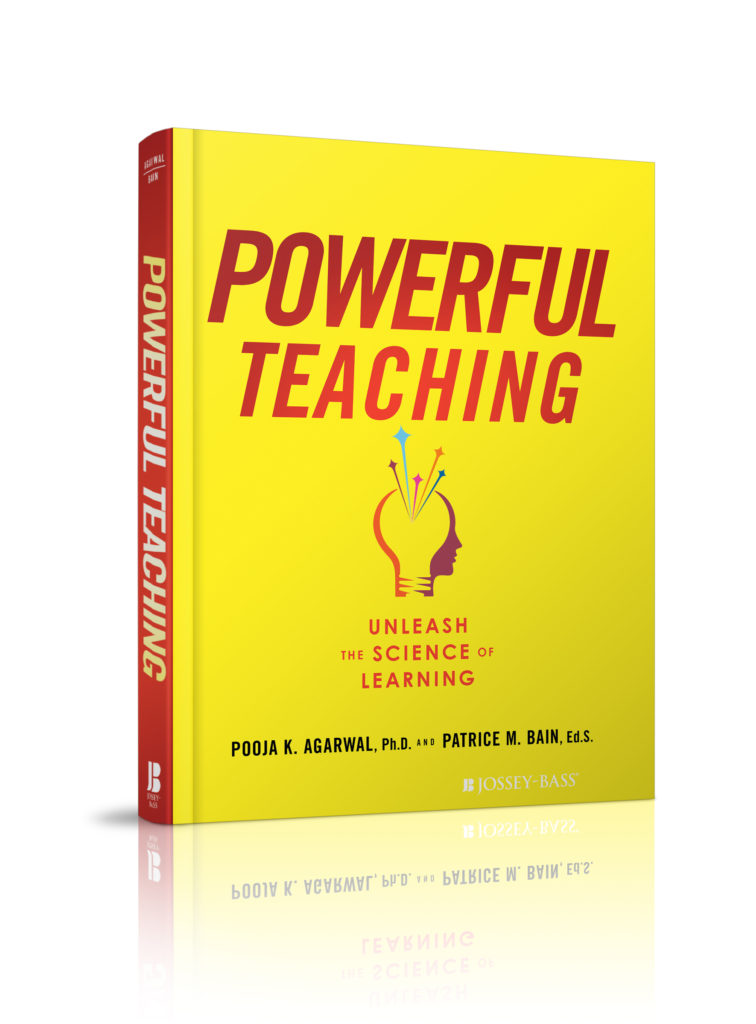
Memory researcher Pooja Agarwal and teacher Patrice Bain have written Powerful Teaching: Unleash the Science of Learning. Let’s see how their book stacks up against our (impossible) criteria:
First: Begins with Research
If you attend Learning and the Brain conferences, you prioritize brain research.
We’re not here for the fads. We’re here for the best ideas that can be supported by psychology and neuroscience.
Happily, Powerful Teaching draws its classroom guidance from extensive research.
Citing dozens of studies done over multiple decades, Agarwal and Bain champion four teaching strategies: retrieval practice, spacing, interleaving, and metacognition.
(As frequent blog readers, you’ve read lots about these topics.)
Agarwal herself did much of the research cited here. In fact, (researcher) Agarwal did much of the on-the-ground research in (teacher) Bain’s classrooms.
And Agarwal studied and worked with many of the best-know memory researchers in the field: “Roddy” Roediger, Mark McDaniel, and Kathleen McDermott, among others.
In short: if you read a recommendation in Powerful Teaching, you can be confident that LOTS of quality research supports that conclusion.
Second: Offers Classroom Specifics
Powerful Teaching is written by two teachers. Bain taught 6-8 grade for decades. And Agarwal is currently a psychology professor.
For this reason, their book BOTH offers research-based teaching advice AND gives dozens of specific classroom examples.
What does retrieval practice look like in the classroom? No worries: they’ve got you covered.
This strength merits particular attention, because it helps solve a common problem in our field.
Teachers often hear researchers say, “I studied this technique, and got a good result.” We infer that we should try that same technique.
But, most research takes place in college classrooms. And, the technique that works with that age group just might not work with our students.
How should we translate these research principles to our classrooms? Over and over again — with specific, practical, and imaginative examples — Bain and Agarwal show us how.
Third: Welcomes Teachers
Increasingly in recent months, I’ve seen scholars argue that teacherly instincts should not be trusted. We should just do what research tells us to do.
As I’ve written elsewhere, I think this argument does lots of damage—because we HAVE to use our instincts.
How exactly do research-based principles of instruction work in thousands of different classrooms? Teachers have to adapt those principles, and we’ll need our experience —and our instincts—to do so.
Powerful Teaching makes exactly this point. As Bain and Agarwal write:
You can use Power Tools your way, in your classroom. From preschool through medical school, and biology to sign language, these strategies increase learning for diverse students, grade levels, and subject areas. There are multiple ways to use these strategies to boost students’ learning, making them flexible in your classroom, not just any classroom.
Or, more succinctly:
The better you understand the research behind the strategies, the more effectively you can adapt them in your classroom – and you know your classroom best.
By including so many teachers’ experiences and suggestions, Agarwal and Bain put teacherly insight at the center of their thinking. They don’t need to argue that teachers should have a role; they simply show us that it’s true.
Fourth: Lively Voice
Scientific research offers teachers lots of splendid guidance … but if you’ve tried to read the research, you know it can be dry. Parched, even.
Happily, both Bain and Agarwal have lively writing voices. Powerful Teaching doesn’t feel like a dry lecture, but a friendly conversation.
For example:
Learning is complex and messy, it’s not something we can touch, and it’s really hard to define. You might even say that the learning process looks more like a blob than a flowchart.
Having tried to draw many learning flowcharts, only to end up with blobs, I appreciate this honest and accurate advice.
What’s Not to Love?
As a reviewer, I really should offer at least some criticism of Power Tools. Alas, I really don’t have much – at least not much substantive.
Once or twice, I thought that the research behind a particular finding is more muddled that PT lets on. For example, as I’ve written about before, we’ve got contradictory evidence about the benefits of retrieval practice for unstudied material.
But, as noted above, Agarwal is an important researcher in this field, and so I’m inclined to trust her judgment.
Mostly, I think you should put Powerful Teaching at the top of your summer reading list. You might sign up for the summer book club. Keep on eye on the website for updates.
Blake Harvard teaches psychology and coaches soccer at James Clemens High School. For three years now, he’s been actively at work trying out teaching strategies derived from cognitive psychology. And, he blogs about his work at The Effortful Educator.
I spoke with Blake about his work, hoping to learn more about the classroom strategies he finds most helpful and effective. (This transcript has been edited for clarity and brevity.)
Andrew Watson
Blake, thank you for taking the time to chat with me.
I always enjoy reading your blog posts, and learning about your strategies to connect psychology research with the teaching of psychology.
Can you give an example of research you read, and then you tried it out in your classroom? Maybe you tinkered with it along the way?
Blake Harvard
Well, first: retrieval practice and spacing. Research tells us that we forget things very rapidly. Forgetting information and then retrieving that information again strengthens ties in the brain. It promotes long term memory of that information.
So, I’m very conscious of different ways that my students elaborate on information and generate information.
What am I doing to have my kids review? Or, how am I spacing out the information that we were learning yesterday versus what we were learning a week ago versus what we were learning months ago. What are the ties among those things? How are they related?
In the past, when we completed a unit of study, it was in the past. We moved on. Now I’m very careful to revisit. I space out their practice and provide the opportunity for my students to think about material we’ve covered in the past.
And second, dual coding.
I think every teacher does some activity where they have students draw something. But dual coding is more than just about drawing things. It’s about organizing the information: how does it link up?
So, using those general concepts of retrieval practice, space practice, and dual coding, and applying them to my class specifically, I’m constantly trying to get my kids to think – to think more.
Andrew Watson:
Can you give an example of a strategy you use to be sure they do?
Blake Harvard
Sure. One example is, I use an unusual template with multiple-choice questions.
In a normal multiple-choice question, you have a kid read it. They answer “B.” You think, “okay B’s correct, let’s go to the next thing.”
Well, I’ve got this template where kids have to use – have to think about – A through E.
If B’s the right answer, they have to tell me why B’s the right answer. That is, they have to think about B.
But, then, they also have to take A, C, D, and E, and think about those too.
Why is C the wrong answer?
Or, how could you make D into the right answer?
Or, what question could you ask to make E the right answer?
Even, why is A tricky?
Andrew Watson
That seems both simple and extraordinarily powerful at the same time.
Blake Harvard
I don’t want to boil all of cognitive psychology down to that, but that’s really central, I think. There’s no elaborate trick. You don’t need any new technology. At the end of the day, you’re just getting those kids’ brains thinking more with the information.
Andrew Watson
Are there some teaching strategies that you read research about, and you tried them out, and you thought: I understand why this works in psychology lab, but it actually just doesn’t work in my classroom. I’m not gonna do it anymore.
Blake Harvard
Well, I just recently did something with flexible seating. I have an AP psychology student who wanted to try this out in my classroom, I said sure.
I have first block and second block class, and they’re both AP Psychology classes, and they’re both on the same pace, doing the same stuff.
We took the first block class, and we put them in a flexible seating classroom. This classroom had beanbags, it had a couch, it had comfortable chairs, it had only one or two tables with traditional chairs.
With my second block class, we kept them in more traditional seating: sitting at tables, facing the front.
And then I taught a unit, which is about seven or eight days, to both classes. I tried to keep everything the same as much as possible, and at the end we took our unit exam and then we compared the data.
So: how did the seating affect the grades, right?
The people in the flexible seating classroom did worse than the people in the traditional seating.
And then I took the grades and compared them to people who took the same course and the same test in years past. I got the same results. The flexible seating in that one classroom was worse than all of the other classes.
I know it’s not perfect methodology. Nothing is perfect “in the wild,” so to speak. But, I gave it a go. And I’ve decided that that’s not what I want to do.
Now, my student was focused more on the emotional part of it: “how did the kids feel about it?”
She had them fill out a survey: “Do you think you did better?” “Did you feel more comfortable in class?” – those sorts of things. And I haven’t seen those surveys yet; she’s compiling information herself. I am interested to see those too.
I heard some of the comments, and it’s interesting. Some of the comments on the first day of the class that was in the flexible seating classroom were like, “Oh my gosh! This is great!” And then by the end it was, “When is this over?”
Andrew Watson:
I’m wondering if your students take the strategies you use to their other classes? Do they study history with retrieval practice? Or science? Or do you find it stays pretty local to the work you do with them?
Blake Harvard
The short answer is: I don’t know. But I definitely impress upon them that this is how you should be studying.
Rereading your notes is not the most effective way to study. Going back over your notes and highlighting them is not effective. If you’re not thinking about the information, if you’re not actually trying to do something with it, you’re probably not being as effective as you should be.
In fact, it’s not just about simplifying; the right study strategies actually save you time. If you’ve tested yourself on this concept two and three times, and you get the same things right, you’re probably pretty good. You got it. Focus on the other things that you haven’t gotten right.
It doesn’t matter if it’s math, it doesn’t matter if it’s biology, it doesn’t matter what it is. The brain works the way the brain works. If you can’t use the information, if you can’t answer this question, you don’t know it. And you need to study it, because if you did know it, you would have answered the question. It’s as simple as that.
Andrew Watson
Yes. So, we talked about whether or not students use these strategies in other classes. Are there things you encourage them to do that have research support, but they’re particularly resistant to?
Blake Harvard
That’s an interesting question. Nothing off the top of my head is coming to me…
You know: those who don’t think they’re great artists – at first, don’t want to use dual coding. Because they think “my drawing’s bad.” And I’ll say: “you know, it’s not about how good your drawing is. It’s about what it represents to you, in your mind.”
Andrew Watson
The mental practice that goes into it.
Blake Harvard
Exactly. Once you explain that to them, they’re much more receptive to it.
Andrew Watson
One of the tricky parts of our field is that there are many teaching strategies that people say have “a whole lot of research support.” And part of our job is to be good at sifting the good stuff from the not good stuff.
Do you have any advice for teachers who are trying to figure out what really is valid and valuable, not just trending on Twitter?
Blake Harvard
It’s never easy, you know.
Often, I look for multiple cases of a particular teaching strategy. Did they test 20 kids in one classroom? Or was this tested across the country?
You also want to think about the people you have in your class. If researchers test a particular demographic, but you don’t teach that demographic, perhaps their conclusion doesn’t apply to your class. Something that might work in an elementary classroom: there’s a chance it could work in my AP Psychology classroom, but I’ve got to really look at it.
To be fair, this is something I’m figuring out myself.
Andrew Watson
I know that you are a coach as well as a teacher. I wonder if you use any of these strategies in your coaching world as well as your teaching world.
I want to show my soccer players what a skill should look like, what the strategy does on the field, why it works.
We want to start small. I want each player individually working on it, and perfecting it or getting better at it. Then we go into a small sided game: maybe two-versus-two or three-versus-three. And then, let’s work it into a bigger scenario.
Eventually, obviously the goal is that they use it in a real-world game.
Just like in the classroom, I’m not a huge fan of inquiry-based learning. I think that there are much more effective ways of teaching than that. I want to explain each new concept to them very clearly, in a very organized way, so that they have a good understanding of what it is. Then we try to apply it to real life. But I don’t start off there.
Andrew Watson
So, you follow the coaching version of direct instruction.
Blake Harvard
Right, yes.
Andrew Watson
Are there questions I ought to have asked you which I haven’t asked you?
Blake Harvard
It’s an interesting journey to get to where I am right now. I graduated with my Master’s Degree in 2006 and up until about 2016 I was just doing just normal professional development: whatever the school had for me to do.
Sometimes I was really excited about it; sometimes I was sitting in there barely paying attention. But now that I’ve found these different types of professional development opportunities, I see they can really improve you, and improve your students and your classroom.
You don’t have to think “I’ll just do the PD that I’m supposed to do and then I go back to my classroom.” There are ways – simple ways, easy ways – to improve your classroom, to improve learning for your students.
Andrew Watson
It’s interesting you say that, because you’ve described my journey as well. I had been a classroom teacher for decades when I found Learning and the Brain, and those conferences completely changed my professional trajectory.
Do students learn better after they experience failure? Two recent studies over at The Science of Learning help us answer that question.
In the first study, professors in a Canadian college wanted to help their Intro Bio students learn difficult concepts more effectively. (Difficult concepts include, for example, the “structural directionality of genetic material.”)
They had one Intro Biology section follow a “Productive Failure” model of pedagogy. It went like this.
First, students wrestled with conceptual problems on these difficult topics.
Second, they got in-class feedback on their solutions.
Third, they heard the professor explain how an expert would think through those topics.
Another Intro Bio section followed these same steps but in a different order:
First, they heard the professor explain how an expert would think .
Second, students wrestled with conceptual problems.
Third, they got in-class feedback on their solutions.
So, all students did the same steps. And, they all followed an “active pedagogy” model. But, one group struggled first, whereas the other group didn’t.
Who Learned More?
This answer proves to be unusually complicated to determine. The researchers had to juggle more variables than usual to come up with a valid answer. (If you want the details, click the link above.)
The headlines are:
On the next major test, students who experienced productive failure learned more.
On the final exam, however, only the “low performing” students did better after productive failure. For the middle- and upper- tier students, both strategies worked equally well.
Conclusion #1:
So, we can’t really conclude that productive failure helps students learn.
Instead, we’re on safer ground to say that – over the longer term – productive failure helps “low performing” students learn (compared to other kinds of active learning).
But Wait, There’s (Much) More
Two weeks after they published the study about Canadian college students in Biology classes, Science of Learning then published a study about German fifth graders learning fractions.
(As we discussed in this post, watching students learn fractions helps researchers measure conceptual updating.)
In particular, these researchers wanted to know if students learned better after they struggle for a while. (Again, for details click the link.)
In this case, the answer was: nope.
So, we arrive at Conclusion #2:
Somecollege students, but not most, learned more from productive failure in a biology class – compared to those who learned via other active learning strategies.
However, fifth graders did not learn more about fractions – compared to those who learned via direct instruction.
Got that?
The Biggie: Conclusion #3
When teachers come to research-world, we can be tempted to look for grand, once-and-for-all findings.
A particular study shows that – say – students learn better when they use an iPad to study astronomical distances. Therefore, we should equip all our students with iPads.
But, that’s NOT what the study showed. Instead, it showed that a particular group of students studying a particular topic with a particular technology got some benefit – compared to a particular alternate approach.
So, Conclusion #3:
Teachers can often find helpful research on teaching strategies.
We should assume that results vary depending on lots of highly specific conditions. And therefore, we should seek out research that includes students (and classroom subjects) as much like our own as possible.
And so: if you teach biology to college students, you might give the first study a close look to see if its methods fit your students well. (Given that it worked particularly well with struggling students, that variable probably matters to you.)
If, however, you teach fractions to fifth graders, you should probably hold off on productive failure – unless you find several other studies that contradict this one.
In other words: teachers can learn the most from psychology and education research when we investigate narrow and specific questions.
A final thought. I’ve only recently come across the website that published these studies. Congratulations to them for emphasizing the complexity of these research questions by publishing these studies almost simultaneously.
I’m sure it’s tempting to make research look like the last word on a particular topic. Here, they’ve emphasized that boundary conditions matter. Bravo.
In school as in life, sometimes we just need to get stuff done. And, truthfully, getting stuff done can be a real challenge.
For instance: I’m about to start writing a book. Based on previous book-writing experiences, I can predict the mundane problems that will get in my way.
My cats invariably need attention just as I’m starting to get in the zone.
The alerts from my email account lure me away from difficult writing passages.
I can never decide: stop for a snack now, or wait until lunch?
Luckily, we’ve got a remarkably simple strategy to get over these predictable hurdles.
Give Me Three Steps
Step 1: make a list of the potential problems. (I’ve already done that.)
Step 2: figure out the most plausible solutions.
So, for instance: instead of responding to my email alerts, I can simply close that browser. Problem solved.
Step 3: turn the first two steps into an “if-then” plan.
IF I get an email alert while working on my book, THEN I’ll close my email browser rather than look at the email.
Believe it or not, this simply process makes it much likelier that I will, in fact, ignore the email. (Or the cat, or my hunger.) And, because I’ve taken care of the most common obstacles, I’m much likelier to get my book written.
(Ask me six months from now how it’s going.)
Two More Steps?
This technique is even more effective when combined with another technique called “mental contrasting.”
In a recent article summarizing research in these fields, Marc Hauser describes mental contrasting this way:
In [mental contrasting], the individual first identifies and vividly describes a desired goal or wish. To be effective, this wish has to be feasible, but not easy.
Next, the individual identifies an obstacle that might get in the way of achieving this goal and vividly describes it [too].
Doing both together — vividly describing the goal AND vividly describing the obstacle — turns out to be much more helpful than doing just one or the other.
The Proof in the PSAT, and the Pudding
These techniques seem so simple that it’s hard to believe they work. In fact: why should we believe it?
Well, we’ve got some good research to persuade us. Hauser’s article, in fact, does a very helpful job summarizing both the theoretical background behind these strategies, and the studies that show their effectiveness.
For instance, Angela Duckworth (yes, that Angela Duckworth) worked with high-school students who wanted to prepare for the PSAT. Those who went through this process did 60% more practice problems than those who did a control task instead.
In fact, we’ve got good findings for non-academic tasks as well: limiting drinking, smoking, snacking, and so forth.
Practical Applications for Students
This technique, it seems to me, could be VERY easy for teachers to use. When we talk with our students about their homework habits, we can guide them through this process.
In fact, when I work with students in schools, I bring a specific form to guide them through the process.
Equally helpfully, we can use this technique to get our own work under control as well. We might not all have books to write, but we all have plenty of lesson-planning to do.
IF my phone rings while I’m preparing tomorrow’s class, THEN I’ll switch the phone to airplane mode without looking at the caller ID.
Psychology research offers lots of big ideas for improving student learning: self-determination theory, or the spacing effect, or cognitive load theory.
Once we make sense of that research, we teachers work to translate those big idea to practical classroom strategies.
In some cases, we can simply do what the researcher did. In most cases, however, we have to adapt their test paradigm to our specific classroom world.
So, for example, Nate Kornell explored the spacing effect with flashcards. He found that 1 deck of 20 cards produced more learning 4 decks of 5 cards. Why: a deck with 20 cards spaces practice out more than a deck with five cards.
That “big idea” gives teachers a direction to go.
But: we should not conclude that 20 is always the right number. Instead, we should adapt the concept to our circumstances. 20 flashcards might be WAY TOO MANY for 1st graders. Or, if the concepts on the cards are quite simple, that might be too few for college students studing vocabulary.
Translating Retrieval Practice
We know from many (many) studies that retrieval practice boosts learning.
In brief, as summarized by researcher Pooja Agarwal, we want students to pull ideas out of their brains, not put them back in.
So, students who study by rereading their notes don’t learn much; that’s putting ideas back in. Instead, they should quiz themselves on their notes; that’s pulling ideas out.
This big idea makes lots of sense. But, what exactly does that look like in our classrooms?
Over the years, teachers and researchers have developed lots of suggestions. (You can check out Dr. Agarwal’s site here for ideas.)
Thinking about retrieval practice, researchers in Germany asked a helpful question. In theory, closed-book quizzes ought to generate more learning than open-book quizzes.
After all: if my book is closed, I have to pull the information out of my brain. That’s retrieval practice.
If my book is open, I’m much likelier simply to look around until I find the right answer. That’s not retrieval practice.
Sure enough, closed-book quizzes do produce more learning. This research team retested students on information twice: one week after, and eight weeks after, they heard information in a lecture.
Sure enough, the students who took closed-book quizzes did substantially better than those who took open-book quizzes. (The cohen’s d values were above 0.80.)
In brief: we now have one more research-supported strategy for creating retrieval practice.
As always, I think we should be careful to think about limits on such research.
In the first place, this study took place with college students. If you teach younger students, and your experience tells you that an open-book strategy will work better under particular circumstances, you might ask a trusted colleague for a second opinion. Research like this gives us excellent guidance, but it can’t answer all questions.
In the second place, other variables might come strongly into play. For instance: stress. If your school culture has always allowed open-book quizzes, your students might freak out at the prospect of a closed-book alternative. If so, the benefits of retrieval practice might be lost to anxiety overload.
In this case, you’ll need to take the time to explain your reasoning, and to ease your students into new learning habits.
In any case, we can be increasingly confident that many varieties of retrieval practice produce the desirable difficulties that help students learn. (For a fun exception to this rule, click here.)
With teaching as with baking, sometimes you should follow steps in a very particular order. If you don’t do this, and thenthat, and then the other, you don’t get the best results.
Two researchers in Germany wanted to know if, and when, and how, students should study incorrect answers.
To explore this question, they worked with 5th graders learning about fractions. Specifically, they taught a lesson about comparing fractions with different denominators.
(When studying this topic, students can’t rely on their instincts about whole numbers. For that reason, it’s a good subject to understand how students update conceptual models.)
They followed three different recipes.
One group of 5th graders saw only correct answers.
A second group saw both correct and incorrect answers.
A third group saw correct and incorrect answers, and were specifically instructed to compare correct and incorrect ones.
Which recipe produced the best results?
The Judges Have Made Their Decision
As the researchers predicted, the third group learned the most. That is: they made the most progress in updating their conceptual models.
In fact: the group prompted to compare right and wrong answers learned more than the group that saw only the right answers. AND they learned more than the group that saw (but were not prompted to compare) right and wrong answers.
In other words: the recipe is very specific. For this technique to work, students should first get both kinds of information, and second be instructed to compare them.
Important Context
I’ve held off on mentioning an important part of this research: it comes in the context of problem-based learning. Before these 5th graders got these three kinds of feedback, they first wrestled with some fraction problems on their own.
In fact, those problems had been specifically designed to go well beyond the students’ mathematical understanding.
The goal of this strategy: to make students curious about the real-world benefits of learning about fractions with different denominators in the first place.
If they want to know the answer, and can’t figure it out on their own, presumably they’ll be more curious about learning when they start seeing all those correct (and incorrect) answers.
As we’ve discussed before, debates about direct instruction and problem-based learning (or inquiry learning) often turn heated.
Advocates of both methods can point to successes in “their own” pedagogy, and failures in the “opposing” method.
My own inclination: teachers should focusthe on relevant specifics.
In the link above, for example, one study shows that PBL helps 8thgraders think about deep structures of ratio. And, another study shows that it doesn’t help 4th graders understand potential and kinetic energy.
These German researchers add another important twist: giving the right kind of instruction and feedback after the inquiry phase might also influence the lesson’s success.
Rather than conclude one method always works and the other never does, we should ask: which approach best helps my particular students learn this particular lesson? And: how can I execute that approach most effectively?
By keeping our focus narrow and specific, we can stay out of the heated debates that ask us to take sides.


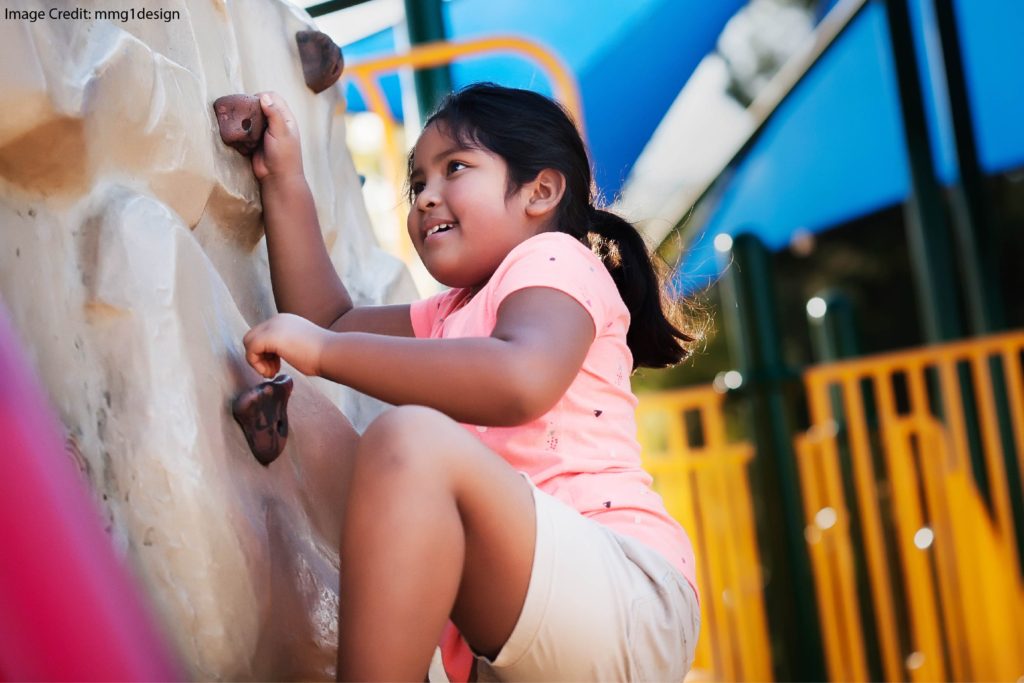
![[A Specific] Movement Helped [Specific] Students Learn [A Specific] Thing](https://www.learningandthebrain.com/blog/wp-content/uploads/2019/05/AdobeStock_201115751_Credit-1024x684.jpg)