Today’s book review is by Dr. Rob McEntarffer
“Without… [a] mental model of how students learn, the teacher will not be able to identify the key elements of a teaching method or may implement it improperly.”
- S. Chew, “We Can do Better than Best Practices,” The Teaching Professor, Aug. 28, 2023
During my first years teaching high school, I was anxious about whether I was teaching “right.” I often wondered how to make teaching decisions and what to base those decisions on. I talked to experienced teachers and the answer was usually something like “Don’t worry about it — you’ll figure it out as you teach longer.” That answer didn’t relieve my anxiety. Isn’t there research about teaching and learning I could use as I thought about my lessons?
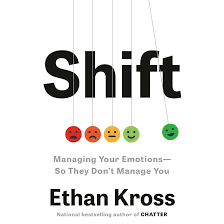
In hindsight, I know that I was looking for a “mental model of how students learn” referred to in Dr. Stephen Chew’s quotation. These mental models weren’t emphasized in my teacher training. Based on my high school teaching career and my current work teaching future teachers, I believe Chew is correct: mental models of learning are vital tools for making teaching decisions.
Two recent books, Mental Models by Heal and Berlin, and Just Tell Them, by Groshell, encourage us to think deeply about these models. The books have some shared DNA – both books:
- encourage teachers to think about research and theories regarding how people learn
- emphasize what researchers know about the structure of human memory, encoding/retrieval processes, and implications for teaching and learning
- focus on how these research findings can be USED by teachers to help students learn.
Mental Models is in some ways a wider ranging book: Heal and Berlin’s goal is to explore the idea of mental models in decision making. Their definition of mental models is broad: a mental model is any “cognitive blueprint that guides our actions.” This inclusive definition allows them to discuss a variety of conceptualizations of mental models and a wide range of practical examples. For example, in the chapter “Ready Player One,” Heal and Berlin discuss research contrasting novice and expert mental models. This detailed discussion about how these research findings can help teachers structure and sequence instruction is one of the most useful explanations of scaffolding I’ve ever read.
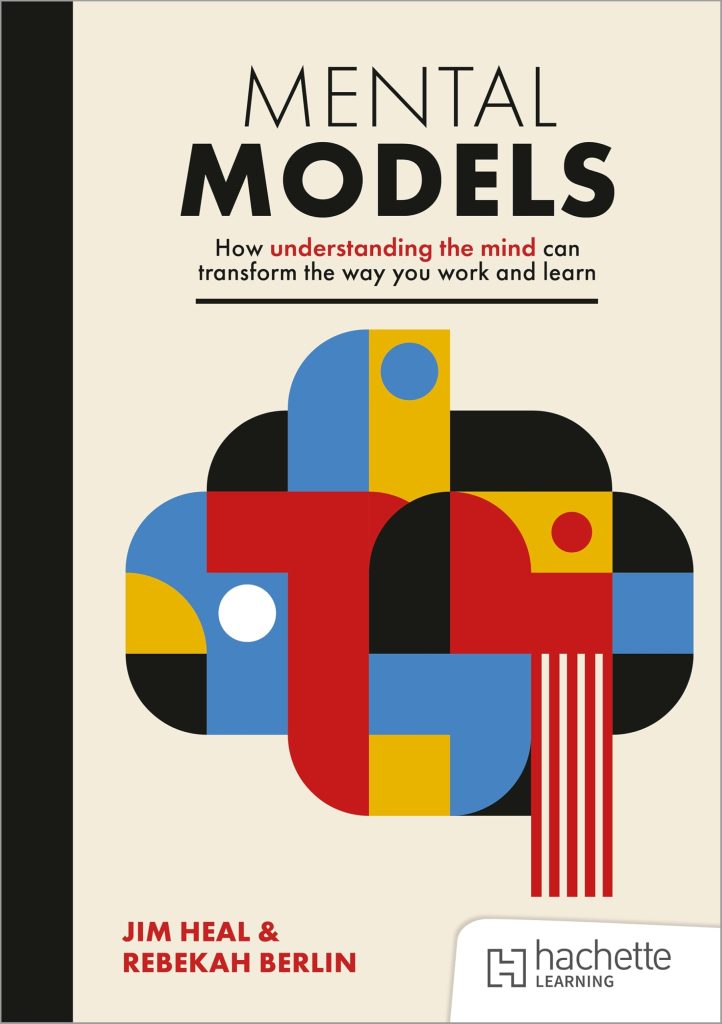
Most of Heal and Berlin’s examples directly relate to classrooms, but the book also includes several examples from the business world and other contexts. Discussions and applications are well supported by cognitive psychology references, and they spend time discussing details of the relevant research studies rather than just citing sources.
In contrast, Just Tell Them focuses like a laser beam on a specific aspect of teaching: the task of explaining. Groshell walks readers through a concise tour of research on effective explanations, why they are effective based on mental models of learning, and multiple practical examples. For example, in the chapter “Show them What it Is and What it Isn’t,” Groshell incorporates research on multiple principles (wording, difference, sameness, and testing) to demonstrate how a teacher might adapt one realistic example of an explanation.
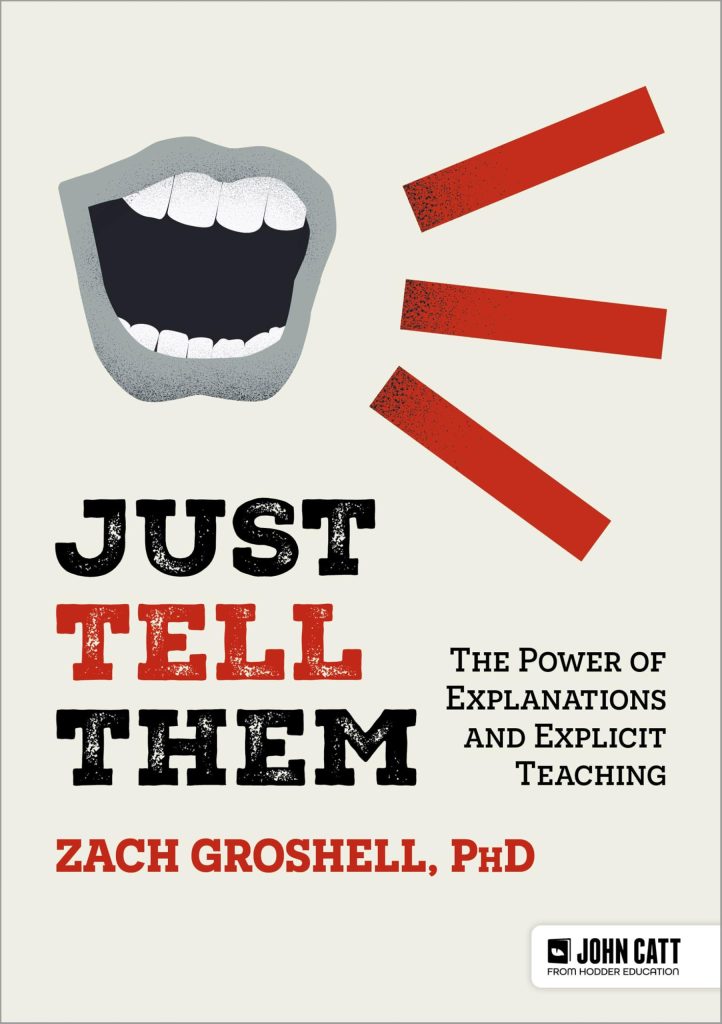
Groshell uses his own advice about effective explanations in the organizational choices he makes in the book, resulting in clear, evidence-informed, well-explained examples teachers can use.
Both books include numerous references and research findings are used well. However, a subject index in both books could help teachers more quickly find references to cognitive psychology principles and other topics. Also, at times both books may dive a bit too deeply into some specific topics and risk overwhelming readers. For example, the discussions about “conversational implicature” in Mental Models and the five different multimedia principles in Just Tell Them could be discussed more effectively in articles or book chapters devoted to those specific topics. At times, the granularity of research findings and advice in these sections threaten to overwhelm readers with details and obscure the more general (and more important) aspects of the mental models being discussed.
These books are the kinds of resources I was looking for as a young, anxious teacher who wanted to use a mental model of how students learn to make teaching decisions. They are useful resources for anyone interested in how cognitive psychology findings can be used in actual classrooms. Both books seek to help teachers understand mental models of learning and how these models can be used to help us make teaching choices that will increase student learning.
Rob McEntarffer taught high school English, psychology, and philosophy for 13 years. While teaching, he became interested in educational measurement issues and worked as an Assessment/Evaluation specialist with Lincoln Public Schools starting in 2005. Rob earned his PhD in Teaching, Learning, and Teacher Education in 2013, focusing his research on how teachers make room for formative assessment processes in their classrooms. He now teaches in the College of Education at Doane University. You can find his blog here.