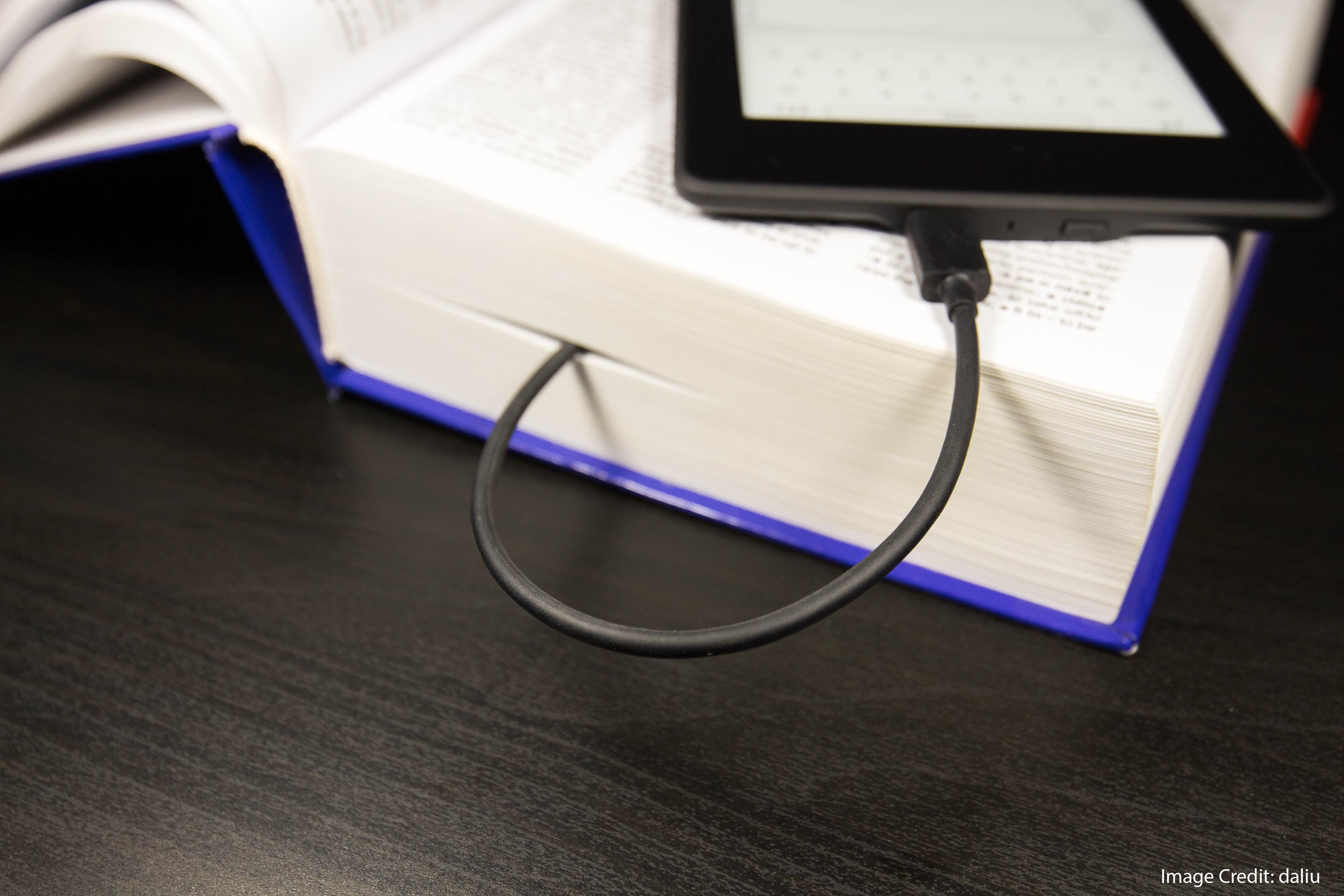
The invaluable Daniel Willingham briefly reviews the literature, and concludes that — for the time being — students understand more when they read on paper than when they use e-readers.
Willingham acknowledges that his review isn’t comprehensive. However, he’s recently written a book about reading instruction, and so I suspect he’s more up-to-date than most in this field.
If he’s right, this conclusion should give pause to the many (MANY) schools that are switching to e-textbooks. I know they have advantages; they’re less expensive, more portable, easier to modify to suit a specific teacher’s or student’s needs.
And yet, if students learn less when reading them, none of those advantages matters!
Willingham is hopeful that the quality of e-readers will improve enough to eliminate this discrepancy. Until that happens, and until we have good research showing that students can learn well from e-readers, old-fashioned books seem like the best technology we have.
(Scott MacClintic, this blog’s tech guru, will have some thoughts on this topic soon…)