
education practice – Education & Teacher Conferences Skip to main content
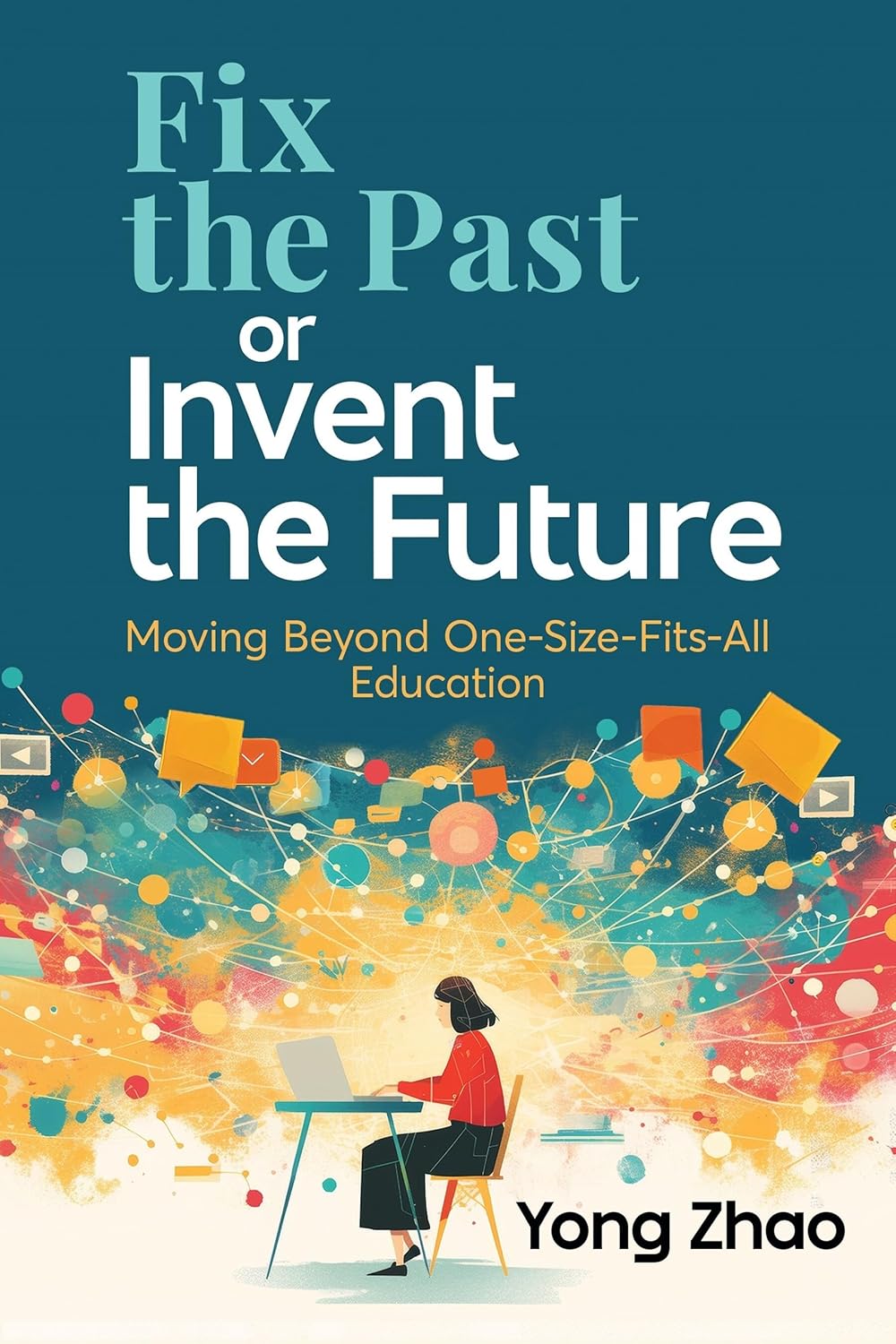
Fix the Past or Invent the Future by Yong Zhao
Erik Jahner, PhD
Erik Jahner, PhD

Educators have long rejected the idea of a Brave New World version of schooling—students programmed, standardized, and engineered for compliance. We resist the image of children treated like interchangeable parts in a system optimized for efficiency. And yet, despite that resistance, we often participate in a quieter version of the same logic. We design instruction, interventions, and reforms around what works for the average student, even while knowing—both from research and from daily experience—that no such student actually exists.

This tension sits at the heart of Yong Zhao’s Fix the Past or Invent the Future.
Zhao’s argument is not that research is misguided or that we should abandon what large-scale studies have taught us. It’s more unsettling than that. He asks us to notice how easily conclusions about groups slip into prescriptions for individuals—and how rarely we pause to consider the consequences. The book is a sustained critique of one-size-fits-all thinking, even when it arrives under the banner of “evidence-based practice.”

The first half of the book takes aim at familiar reform tools: effect sizes, randomized controlled trials, growth mindset, SEL, and even the current enthusiasm for AI. Zhao’s critique is careful. These approaches can be useful. The problem arises when probability is mistaken for certainty.

Effect sizes, Zhao reminds us, describe likelihoods across populations. They do not tell us what will work for a particular student in a particular classroom. A practice can show a positive average effect while leaving some students unchanged—or worse, less engaged and less confident. In fields like medicine, this limitation is taken seriously. Benefits are weighed against potential side effects. In education, those side effects are rarely discussed at all.

We celebrate the mean and overlook the margins.

This overreliance on averages helps explain why decades of reform have produced so little lasting improvement. Programs are scaled up because they “work,” implemented with fidelity, and applied broadly. When students struggle, the response is often more intensity rather than more discernment. More effort. More grit. More persistence.

He does not argue against effort. He argues against the assumption that effort is always the right response. Persistence without direction can become a liability. Students may be encouraged to double down on paths that don’t align with their interests, strengths, or long-term development. Zhao introduces what he calls a meta-growth mindset: the capacity to decide where effort belongs. Sometimes growth means persisting. Sometimes it means redirecting—or stopping altogether.

His discussion of AI follows a similar logic. Zhao is not warning about machines replacing teachers or students outsourcing thinking. His concern is that AI, when embedded in the traditional grammar of schooling, becomes constrained by it. If what students are required to learn remains fixed and prescribed, AI will mostly be used to do old things more efficiently. The real potential of AI, Zhao argues, lies in supporting personalization—helping students find, frame, and pursue meaningful problems in ways that reflect who they are.

The second half of the book turns toward what it would mean to invent the future rather than fix the past. True personalization, Zhao insists, cannot be done for students. It has to be done by them. That requires loosening our grip on prescribed curricula, rethinking assessment, and reframing the role of teachers—not as deliverers of content, but as designers, mentors, and partners.

Learning, in this vision, shifts from solving prepackaged problems to finding new ones. From individual competition to human interdependence. From compliance to contribution. Global competence is not a program to be added on, but an outcome of learning that is connected to real people and real needs.

Fix the Past or Invent the Future does not offer a checklist or a quick fix. Each learner arrives with a jagged profile—uneven strengths, uneven interests, uneven trajectories.

Zhao writes the way many educators think—clearly, directly, and with an eye on real classrooms rather than abstract debates. He moves comfortably between research, lived experience, and concrete examples, which makes even his sharper critiques feel inviting rather than combative. The chapters are easy to follow without feeling formulaic, and his tone encourages readers to pause, reflect, and occasionally push back. It’s a readable, engaging book that respects the reader’s intelligence without demanding unnecessary technical endurance.

The question Zhao leaves us with is not whether our reforms are supported by evidence, but whether we are paying attention to the students in front of us—or merely to the data that describes them from a distance.
Making Room for Impact by Arran Hamilton, John Hattie, and Dylan Wiliam
Erik Jahner, PhD
Erik Jahner, PhD

Making-room-for-impactTime to make time to teach effectively and efficiently by digging into your practice with this insanely useful guide written by Arran Hamilton, John Hattie, and Dylan Wiliam. Making Room for Impact: A De-implementation Guide for Educators is not only for instructors; it’s for anyone associated with any level of education from teachers to researchers and administrators who want to make sure “what works” is not just added to the teacher workload but practices are sifted and dialed-in improving student, parent, and instructor lives and educational experiences.

This book is a powerful resource that promises to reshape your thinking and processes in terms of time, money, and effort. The authors highlight a common issue: while we continuously add new practices in hopes of becoming more effective, we seldom revisit, streamline, or remove outdated ones. The result is a longer workweek filled with stress, frustration, and a sense that even if you are getting things done, you’re not doing them well. But here is a systematic instruction manual to increase efficiency in education practice backed by evidence and scaffolded with useful tables, summaries, surveys, and diagrams from experts who have compiled and evaluated reduction philosophies and their implementations across the world.

The book provides a clear rationale for de-implementation, outlining the problems in current systems and the unrealized potential of reducing waste. The initial chapters set the stage with research and international comparisons, giving you and your institution a strong foundation to begin the practice. Its powerful simplicity and clear message guide readers through evaluating and individualizing processes for their unique contexts, akin to a “getting things done” approach for education. The main ideas are encapsulated in the four Rs of de-implementation:

  • Remove: Eliminate useless or less useful practices.
  • Reduce: Decrease the overuse of certain practices.
  • Re-engineer: Simplify non-essential practices by reducing complexities, steps, or time.
  • Replace: Swap out practices with more efficient and effective ones.

But how do you do this? The means are made clear through a four-step process to streamline your practices while still considering your unique context and current practices.

First, you’ll Discover your current practices, evaluating their effectiveness and understanding what is needed. Then armed with this information, you Decide which of the four Rs to apply. The book guides you through sorting and sifting your existing practices, evaluating their original goals, and determining if they still meet those goals. Detailed guidelines and over 80 potential methods are provided to assist you in this process, allowing you to choose approaches that best fit your context. Next, you’ll envision what the final product will look like and identify pathways to achieve it. The third step is to De-implement, where you bring your plans to life, monitor progress, and prepare for potential setbacks by deploying countermeasures. Finally, you Re-decide, evaluating the success of your de-implementation efforts and making necessary adjustments, emphasizing ongoing evaluation and adjustments to ensure sustainability and expansion.

Numerous case studies throughout the book illustrate these practices in action, making the concepts easier to understand and apply. The figures and tables are instructive and easy to read helping you visualize the process, building a deep understanding of both the philosophy and the practice. A number of these charts and chapters will be reread by you over the years as you internalize the philosophy and hone your practice. The appendices should not be neglected, they are invaluable, offering a “Shopping List” of over 80 de-implementation opportunities, an overview of 50+ cross-disciplinary research studies supporting de-implementation practices, insights into lean and six-sigma approaches, and 50+ tried and true methodologies for implementation from various fields.

The authors also recognize the real school situation—the institutionalization of inefficient and ineffective processes and the political implications of challenging existing views. They respect the psychological challenge of changing personal habits and guide you through both the personal and professional process of de-implementation.

By implementing these practices, you can save time, reduce workload, and improve your work-life balance. Even if learning outcomes remain stable (although they will likely improve), you’ll have more space to evaluate and update practices over time. Ultimately, these strategies are designed to make your day more effective, reduce stress, increase productivity and focus, and allow for necessary adjustments, with the overarching message that less can indeed be more. Not only are these authors giving you back valuable teaching time, but giving you back hours of lost personal time for yourself and your family.