I spoke recently with an AWESOME group of primary school teachers. When our conversations turned to students’ attention, a hot-button topic emerged. They asked:
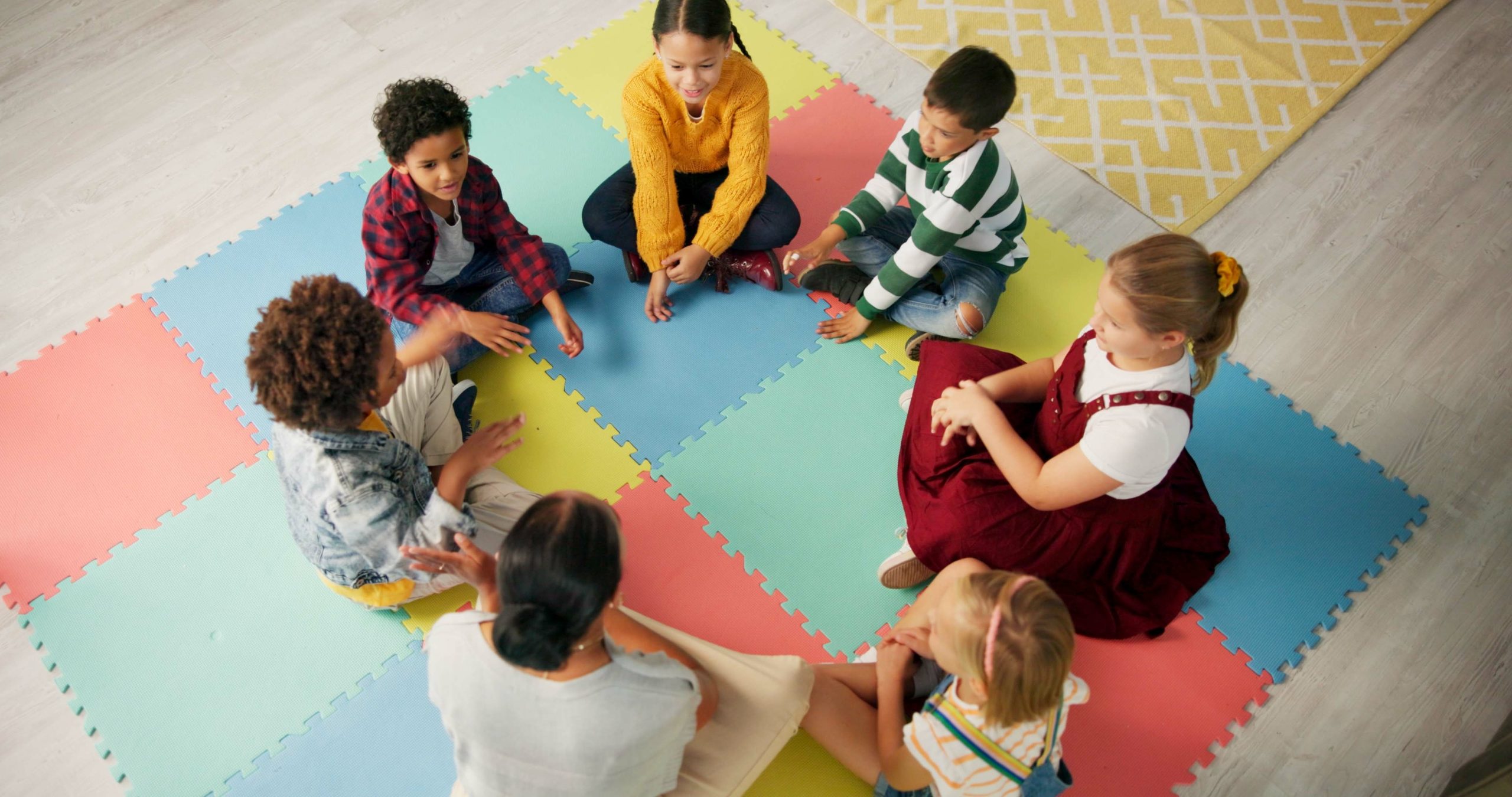
“What does the research show about classroom seating arrangements? Should our students sit in rows or in clusters?”
In my experience, many teachers have a strong emotional commitment to one answer or the other. Our core teaching beliefs tell us that one of these options is not just better, but ethically superior. The alternative often feels like a professional transgression.
These teachers, however, didn’t ask what I FEEL about seating arrangements. They asked what RESEARCH SHOWS.
Their question deserves an answer.
Focus, Focus, Focus
Most of the research I found on this topic explores students’ behavior. Did they call out? Did they distract one another? Did they get their work done?
A research review from 2008, by Drs. Wannarka and Ruhl, considers eight high-quality studies and arrives at two broad conclusions.
First: students sitting in rows show fewer off-task behaviors than students sitting in clusters. As their abstract says:
Evidence supports the idea that students display higher levels of appropriate behaviour during individual tasks when they are seated in rows, with disruptive students benefiting the most.
Overall, this finding just makes sense. We humans are a social bunch; we like to interact with each other. If the classroom seating arrangement makes it easier for me to talk with my peers, at least some of my conversation won’t be “on-task.”
The comment that “disruptive students benefit the most” strikes me as a fascinating finding. It implies that “being disruptive” is — at least in part — a characteristic of the environment as much as of the student. That is: some students engage in disruptive behaviors because the classroom seating allows or encourages them to do so. When we change the environment, they (and their classmates) benefit. Rather than thinking of these students as “disruptive students,” we can think of them as students “in the wrong environment.”
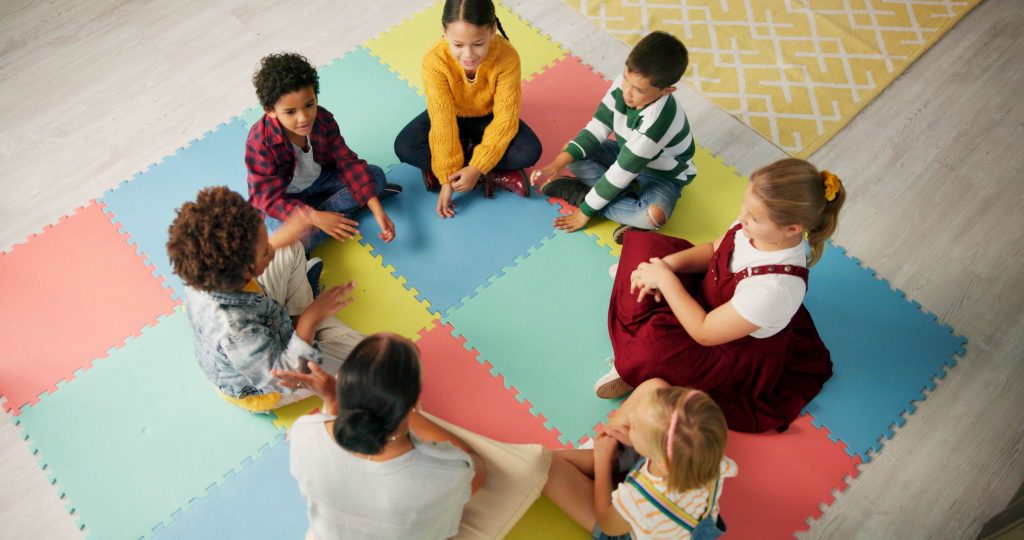
Second: the classroom task should influence the seating arrangement. If my lesson plan calls for independent work, then seating in rows facilitates individual mental focus. If it calls for group discussion, well, pods just make more sense. In the words of Wannarka and Ruhl:
“Teachers should let the nature of the task dictate seating arrangements.”
Here again, this research finding lines up with teacherly intuition. When I myself talk with teachers at schools, I request table seating so that small groups can talk easily with one another. If space limitations require that we meet in an auditorium, I switch out table discussion for turn-n-talks. For all the obvious practical reasons, pedagogy and seating interact.
From Behavior to Thinking
We teachers want to understand the relationship between seating and behavior, as described above. We would also love to know about any potential relationship between seating and thinking. Do seating arrangements have a measureable effect on student learning? A recent study by Dr. Valentina Tobia and others starts to explore this question.
Tobia’s team worked with seventy-seven 4th and 5th graders in Northern Italy. These students sat either in rows, or in pods of four, while they took tests on three different kinds of thinking:
- convergent thinking — which we might call “logical thinking”
- divergent thinking — which we might call “creative thinking”
- social thinking — often known as “theory of mind”
A week later, the students took alternative versions of all three tests, but switched their seating pattern. Row sitters moved to clusters, and vice versa.
Tobia wanted to know: did the seating influence their success at these different kinds of thinking?
To be extra careful, the researchers also explored the effect of other variables. Did the student’s gender matter? Did their degree of popularity — or loneliness — matter? How about self-esteem, or comfort with physical proximity?
So, what did they find?
What They Found (with Some Caveats)
When it comes to individual thinking — at least as measured in these way — rows help more.
- EVERYONE did better at logical thinking (“convergent thinking”) when seated in rows than when seated in clusters.
- Girls did better at social thinking (“theory of mind”) when seated in rows.
- The findings on loneliness complicate this picture:
- Relatively lonely students did better at creative thinking (“divergent thinking”) and social thinking (“theory of mind”) when seated in rows.
- The least lonely students did better at creative thinking when seated in clusters.
With that one exception, all statistically significant findings favored rows over pods.
Let’s step back and summarize both research pools simply:
For most students in most situations, sitting in rows improves on-task behavior and logical thinking. And: the nature of the classroom task determines the best seating arrangement.
Before that simple summary turns into an iron law, let’s highlight some caveats.
- The Tobia study is JUST ONE STUDY. I haven’t been able to find other recent studies on the topic. We shouldn’t reach emphatic conclusions from one study.
- The Tobia study measured thinking, as explored by specific tests. But it didn’t measure ultimate learning. We don’t know for sure that students will remember and understand better if they sit in rows. (That’s a plausible hypothesis, given the on-task behavior and thinking benefits. But we haven’t tested that hypothesis.)
Another caveat merits emphasis. As noted at the beginning of this post, seating arrangements also have ethical impact. They convey a clear message about the relationship between teacher and student, and the relationships among peers.
Some progressive educators might conclude that the harmful message of rows outweighs their behavioral and cognitive benefits. Traditional educators probably see these studies as confirmation of their approach.
This kind of judgment ultimately relies on values. Researchers can inform the decisions that schools and teachers make, but they can’t make that decision for us. Research provides guidance, not mandates. Teachers must balance these findings with their students’ needs, the classroom task, and their school’s pedagogical values.
Wannarka, R., & Ruhl, K. (2008). Seating arrangements that promote positive academic and behavioural outcomes: A review of empirical research. Support for learning, 23(2), 89-93.
Tobia, V., Sacchi, S., Cerina, V., Manca, S., & Fornara, F. (2022). The influence of classroom seating arrangement on children’s cognitive processes in primary school: the role of individual variables. Current Psychology, 41(9), 6522-6533.