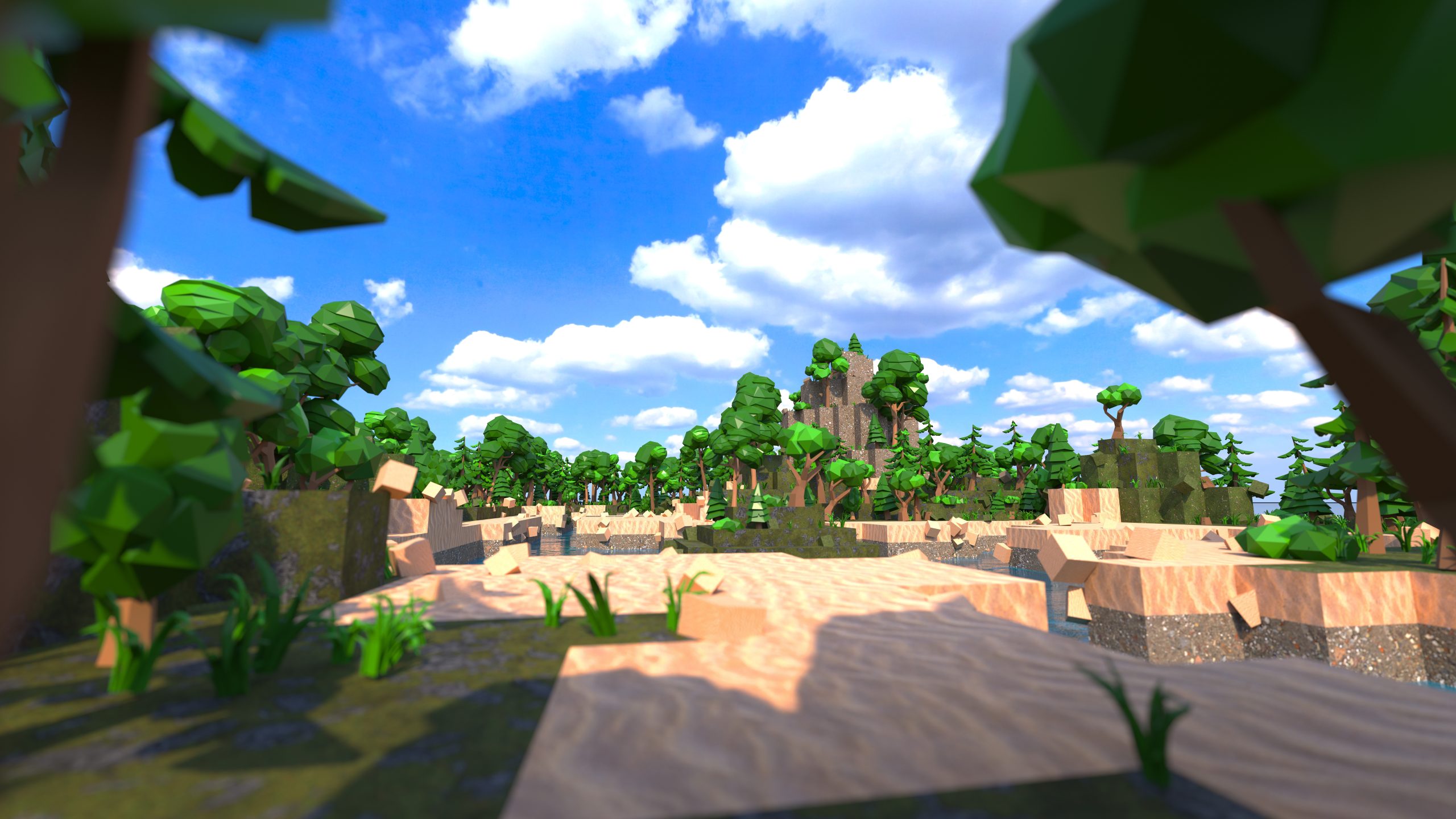
Research doesn’t often sound fun, so you can imagine my enthusiasm when I came across a study exploring Minecraft. Yes, that Minecraft – with the blocks and the digging and the building. And those fluffy animals that bound around the screen.
Specifically, a research team in Ireland – led by Dr. Eadaoin Slattery – wondered what effect Minecraft would have on particular cognitive abilities.
Here’s the story:
Let’s Get Building
Slattery’s team worked with roughly 450 5th and 6th grade students. These students undertook “Minecraft Education” exercises such as:
- Creating a maze
- Creating a map of their local area
- Depicting a scene from a book they had recently read
They spent 60-90 minutes on these assignments during a week over the course of six weeks.
The control group – roughly the same number of students — simply went about their schooling as usual.
Researchers tested all the students – those in control group, and those who did those fun exercises – three times.
- Immediately before the Minecraft Education program began.
- After the final exercise
- Six weeks later
Specifically, they tested students on two cognitive capacities: their spatial ability, and their creativity. They also interviewed teachers to learn more about the classroom experience.
Reasons for Praise, Reasons for Caution
This study has several noteworthy strengths. It includes an unusually large number of participants. Whereas other published studies looking at Minecraft have (I’m not making this up) 27 and 11 participants, this one has several hundred.
Researchers also measured outcomes several weeks after the Minecraft exercises concluded. Research frequently finds that short-term benefits don’t last, so we’re glad to see how enduring any potential benefits might be.
At the same time, we should sound a few notes of caution.
In the first place, the study was funded by…Microsoft. Even with the best of intentions, they no doubt hoped that the research would find all sorts of benefits.
More technically, this study compares students who did something extra with students who did nothing special. We call this a “business-as-usual” control group, and they’re not the most persuasive. Potential benefits could result from the Minecraft. Or they could result from the excitement of doing a cool new thing.
For both those reasons, we should prepare to check our enthusiasm if we see big differences between these groups.
The End of the Maze
So, what did the researchers find? How much did Minecraft improve spatial reasoning and creativity?
Not at all. Nope. Nothing.
More precisely, researchers found a short-term increase in spatial reasoning among the fifth graders who did the exercises – but that increase had vanished six weeks later.
Surprisingly, at the end of the exercise they found that creativity scores were higher among the “business-as-usual” control group – although that difference also vanished after six weeks.
I think the most precise summary of these findings sounds like this: “these Minecraft Education exercises didn’t make any lasting measurable difference. They didn’t help students; they didn’t harm students.” And this result comes from a study that – as noted above – might have been expected to favor Minecraft.
By the way: in those interviews I mentioned, teachers reported high levels of engagement in the Minecraft exercises. They also believed that the exercises helped students with spatial reasoning and creativity. This result might sound like good news, but to me it adds another note of caution. With alarming frequency, teachers sincerely believe that a particular classroom activity results in a particular benefit. But when researchers measure as best they can, they find no real improvement. Our professional optimism often serves us well, but in some cases – it seems – that optimism can lead us to see progress where none exists. Research results like these remind us to be cautious about “trusting our instincts.”
The Center of the Maze
Although a study about Minecraft sounds fun, the results here might seem like an anti-climax. I myself have a more positive take.
- This study strongly suggests that we can’t improve student spatial reasoning or creativity by having them play Minecraft. This finding can prevent us from wasting valuable class time.
- It also reminds us to confirm our hunches with data. Teachers thought the Minecraft games helped … but researchers couldn’t confirm their impression.
As is so often the case, research helps us by offering inspiring possibilities, and by keeping our feet planted on firm ground.
Slattery, E. J., Butler, D., O’Leary, M., & Marshall, K. (2024). Teachers’ experiences of using Minecraft Education in primary school: An Irish perspective. Irish Educational Studies, 43(4), 965-984.